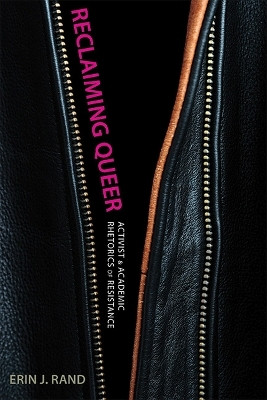
Reclaiming Queer(English, Hardcover, Rand Erin J.)
- Rand Erin J.
Paperback & Hardcover deals ―
Amazon IndiaGOFlipkart ₹ 3365SnapdealGOSapnaOnlineGOJain Book AgencyGOBooks Wagon₹353Book ChorGOCrosswordGODC BooksGOe-book & Audiobook deals ―
Amazon India GOGoogle Play Books GOAudible GO* Price may vary from time to time.
* GO = We're not able to fetch the price (please check manually visiting the website).
Know about the book -
Reclaiming Queer(English, Hardcover, Rand Erin J.) is written by Rand Erin J. and published by The University of Alabama Press. It's available with International Standard Book Number or ISBN identification 0817318283 (ISBN 10) and 9780817318284 (ISBN 13).
Focuses on the kinds of rhetorical agency that are enabled by the linkage of queer theory to the radical practises of queer activists. The 1980s and 1990s were marked by dramatic upheavals and groundbreaking shifts in both queer activism and queer theory in the United States. Indeed, it was not until the late 1980s that the word "queer" - as a newly reclaimed signifier of proud, confrontational sexual identity - could be linked meaningfully with either activism or theory. Queer Unfixed focuses on the kinds of rhetorical agency that are enabled by the linkage of queer theory to the radical practises of queer activists. Erin Rand studies the queer community's responses to the oppressive, frightening, and violent conditions facing gay groups in the 1980s and 1990s. Many of those responses were angry and militant in nature, with the formation of groups such as the Gay Men's Health Crisis (GMHC), AIDS Coalition to Unleash Power (ACT UP), Sex Panic!, Queer Nation, the Pink Panthers, the Lesbian Avengers, and many others. Activism was not intended merely to promote acceptance or tolerance, but to reclaim loudly and forcefully the rights to safety and humanity and to forge identity and strength from victimisation. But the "changing reality" facing gay communities was not limited to AIDS, homophobia, and anti-gay violence. It also included the sudden proliferation and popularity of academic work that questioned not only categories of gendered and sexual identity, but also the relationships of these categories to political action, liberalism, history, and truth. In short, as queer activists were mobilising in the streets in the 1980s and 1990s, queer theorists were producing a similar foment in the halls and publications of academia. The relationship between queer activism and theory was by no means self-evident and natural though. This study takes as its primary object the linkage of queer theory in the acaddemy with street-level queer activism, and seeks to understand and reformulate rhetorical agency through this strategic conjuncture. By examining the kinds of queer activist discourses taken up by queer theorists - as well as those they refute or ignore - Rand seeks to defie the specific kinds of opportunities and constraints that shape the contours of queer agency in activist and academic contexts, opposing the common practise of defining queerness in terms of simple resistance and instead positing queerness as an economy of ambiguity from which agency emerges.
