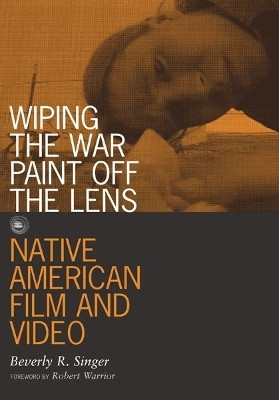
Wiping the War Paint Off the Lens(English, Paperback, Singer Beverly R.)
- Singer Beverly R.
Paperback & Hardcover deals ―
Amazon IndiaGOFlipkart ₹ 1918SnapdealGOSapnaOnlineGOJain Book AgencyGOBooks Wagon₹1,602Book ChorGOCrosswordGODC BooksGOe-book & Audiobook deals ―
Amazon India GOGoogle Play Books GOAudible GO* Price may vary from time to time.
* GO = We're not able to fetch the price (please check manually visiting the website).
Know about the book -
Wiping the War Paint Off the Lens(English, Paperback, Singer Beverly R.) is written by Singer Beverly R. and published by University of Minnesota Press. It's available with International Standard Book Number or ISBN identification 0816631611 (ISBN 10) and 9780816631612 (ISBN 13).
The first comprehensive exploration of Native American filmmaking and video production. Native Americans have thrown themselves into filmmaking since the mid-1970s, producing hundreds of films and videos, and their body of work has had great impact on Native cultures and filmmaking itself. With their cameras, they capture the lives of Native people, celebrating community, ancestral lifeways, and identity. Not only artistic statements, the films are archives that document rich and complex Native communities and counter mainstream media portrayals. Wiping the War Paint off the Lens traces the history of Native experiences as subjects, actors, and creators, and develops a critical framework for approaching Native work. Singer positions Native media as part of a larger struggle for "cultural sovereignty"-the right to maintain and protect cultures and traditions. Taking it out of a European-American context, she reframes the discourse of filmmaking, exploring oral histories and ancient lifeways inform Native filmmaking and how it seeks to heal the devastation of the past. Singer's approach is both cultural and personal, provides both historical views and close textual readings, and may well set the terms of the critical debate on Native filmmaking.
