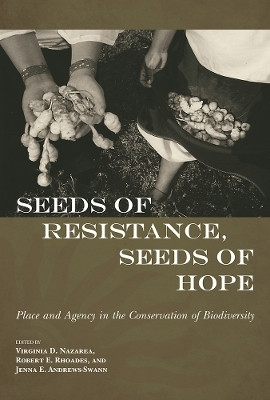
Seeds of Resistance, Seeds of Hope(English, Hardcover, unknown)
- unknown
Paperback & Hardcover deals ―
Amazon IndiaGOFlipkart ₹ 2761SnapdealGOSapnaOnlineGOJain Book AgencyGOBooks Wagon₹309Book ChorGOCrosswordGODC BooksGOe-book & Audiobook deals ―
Amazon India GOGoogle Play Books ₹48Audible GO* Price may vary from time to time.
* GO = We're not able to fetch the price (please check manually visiting the website).
Know about the book -
Seeds of Resistance, Seeds of Hope(English, Hardcover, unknown) is written by unknown and published by University of Arizona Press. It's available with International Standard Book Number or ISBN identification 0816530149 (ISBN 10) and 9780816530144 (ISBN 13).
Food is more than simple sustenance. It feeds our minds as well as our bodies. It nurtures us emotionally as well as physically. It holds memories. In fact, one of the surprising consequences of globalisation and urbanisation is the expanding web of emotional attachments to farmland, to food growers, and to place. And there is growing affection, too, for home gardening and its "grow your own food" ethos. Without denying the gravity of the problems of feeding the earth's population while conserving its natural resources, Seeds of Resistance, Seeds of Hope reminds us that there are many positive movements and developments that demonstrate the power of opposition and optimism. This broad collection brings to the table a bag full of tools from anthropology, sociology, genetics, plant breeding, education, advocacy, and social activism. By design, multiple voices are included. They cross or straddle disciplinary, generational, national, and political borders. Contributors demonstrate the importance of cultural memory in the persistence of traditional or heirloom crops, as well as the agency exhibited by displaced and persecuted peoples in place-making and reconstructing nostalgic landscapes (including gardens from their homelands). Contributions explore local initiatives to save native and older seeds, the use of modern technologies to conserve heirloom plants, the bioconservation efforts of indigenous people, and how genetically modified organisms (GMOs) have been successfully combated. Together they explore the conservation of biodiversity at different scales, from different perspectives, and with different theoretical and methodological approaches. Collectively, they demonstrate that there is reason for hope.
