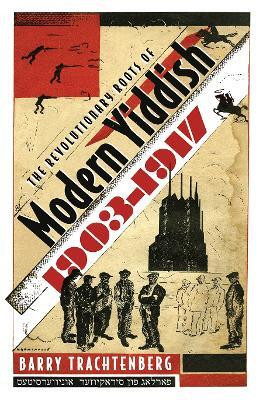
Revolutionary Roots of Modern Yiddish, 1903-1917(English, Hardcover, Trachtenberg Barry)
- Trachtenberg Barry
Paperback & Hardcover deals ―
Amazon IndiaGOFlipkart ₹ 3371SnapdealGOSapnaOnlineGOJain Book AgencyGOBooks Wagon₹365Book ChorGOCrosswordGODC BooksGOe-book & Audiobook deals ―
Amazon India GOGoogle Play Books GOAudible GO* Price may vary from time to time.
* GO = We're not able to fetch the price (please check manually visiting the website).
Know about the book -
Revolutionary Roots of Modern Yiddish, 1903-1917(English, Hardcover, Trachtenberg Barry) is written by Trachtenberg Barry and published by Syracuse University Press. It's available with International Standard Book Number or ISBN identification 0815631901 (ISBN 10) and 9780815631903 (ISBN 13).
At the beginning of the twentieth century, Yiddish was widely viewed, even by many of its speakers, as a corrupt form of German that Jews had to abandon if they hoped to engage in serious intellectual, cultural, or political work. Yet, by 1917 it was the dominant language of the Russian Jewish press, a medium for modern literary criticism, a vehicle for science and learning, and the foundation of an ideology of Jewish liberation. ""The Revolutionary Roots of Modern Yiddish, 1903-1917"" investigates how this change in status occurred and three major figures responsible for its transformation.Trachtenberg reveals how, following the model set by other nationalist movements that were developing in the Russian empire, one-time revolutionaries such as the literary critic Shmuel Niger, the Marxist Zionist leader Ber Borochov, and the linguist Nokhem Shtif committed themselves to the creation of a new branch of Jewish scholarship dedicated to their native language. The new 'Yiddish science' was concerned with the tasks of standardizing Yiddish grammar, orthography, and word corpus; establishing a Yiddish literary tradition; exploring Jewish folk traditions; and creating an institutional structure to support their language's development. In doing so, the author argues, they hoped to reimagine Russian Jewry as a modern nation with a mature language and culture and one that deserved the same collective rights and autonomy that were being demanded by other groups in the empire.
