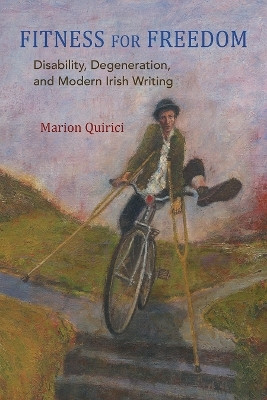
Fitness for Freedom(English, Hardcover, Quirici Marion)
- Quirici Marion
Paperback & Hardcover deals ―
Amazon IndiaGOFlipkart ₹ 6855SnapdealGOSapnaOnlineGOJain Book AgencyGOBooks Wagon₹270Book ChorGOCrosswordGODC BooksGOe-book & Audiobook deals ―
Amazon India GOGoogle Play Books GOAudible GO* Price may vary from time to time.
* GO = We're not able to fetch the price (please check manually visiting the website).
Know about the book -
Fitness for Freedom(English, Hardcover, Quirici Marion) is written by Quirici Marion and published by Syracuse University Press. It's available with International Standard Book Number or ISBN identification 0815611927 (ISBN 10) and 9780815611929 (ISBN 13).
Fitness for Freedom explores the legacy of intersectional stereotypes of disability, race, gender, sexuality, class, and religion that justified imperial rule in Ireland and the forms of oppression that continued after independence. Marion Quirici identifies models of citizenship and creative autonomy in Irish modernist literature that valorize vulnerability over ability and interdependence over independence. She uncovers a history in which an entire nation, Ireland, was characterized as disabled and therefore "not fit for freedom." Beyond symbolism, the Famine and decades of emigration led to a perception that Ireland's racial stocks were depleted, and that those who remained were feeble and few. The fraught relationship between disability and Irishness provides context for Quirici's analysis of modernist Irish literature. Revivalists such as William Butler Yeats, Lady Gregory, Padraic Pearse, and the Gaelic Athletic Association created new mythologies of Irish ability to counter imperial stereotypes, tacitly reinforcing the idea of disability as a disqualification for sovereignty. Certain Irish modernists, however-James Joyce, Edna O'Brien, Samuel Beckett, Brian O'Nolan, and Christy Brown-called the "fitness for freedom" ideology into question. These authors allow us to disentangle disability from unfitness and scrutinize its relationship to liberation. In their work, disability becomes an avenue for exploring the human experience and discovering the inherent creativity and collaborative potential of an interdependent life.
