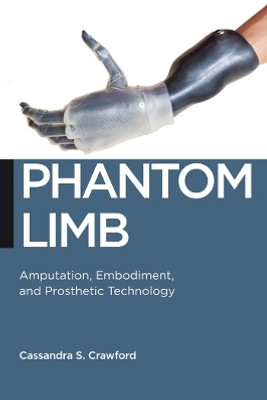
Phantom Limb(English, Hardcover, Crawford Cassandra S.)
- Crawford Cassandra S.
Paperback & Hardcover deals ―
Amazon IndiaGOFlipkart ₹ 8230SnapdealGOSapnaOnlineGOJain Book AgencyGOBooks Wagon₹741Book ChorGOCrosswordGODC BooksGOe-book & Audiobook deals ―
Amazon India GOGoogle Play Books GOAudible GO* Price may vary from time to time.
* GO = We're not able to fetch the price (please check manually visiting the website).
Know about the book -
Phantom Limb(English, Hardcover, Crawford Cassandra S.) is written by Crawford Cassandra S. and published by New York University Press. It's available with International Standard Book Number or ISBN identification 0814789285 (ISBN 10) and 9780814789285 (ISBN 13).
Phantom limb pain is one of the most intractable and merciless pains ever known-a pain that haunts appendages that do not physically exist, often persisting with uncanny realness long after fleshy limbs have been traumatically, surgically, or congenitally lost. The very existence and "naturalness" of this pain has been instrumental in modern science's ability to create prosthetic technologies that many feel have transformative, self-actualizing, and even transcendent power. In Phantom Limb, Cassandra S. Crawford critically examines phantom limb pain and its relationship to prosthetic innovation, tracing the major shifts in knowledge of the causes and characteristics of the phenomenon. Crawford exposes how the meanings of phantom limb pain have been influenced by developments in prosthetic science and ideas about the extraordinary power of these technologies to liberate and fundamentally alter the human body, mind, and spirit. Through intensive observation at a prosthetic clinic, interviews with key researchers and clinicians, and an analysis of historical and contemporary psychological and medical literature, she examines the modernization of amputation and exposes how medical understanding about phantom limbs has changed from the late-19th to the early-21st century. Crawford interrogates the impact of advances in technology, medicine, psychology and neuroscience, as well as changes in the meaning of limb loss, popular representations of amputees, and corporeal ideology. Phantom Limb questions our most deeply held ideas of what is normal, natural, and even moral about the physical human body.
