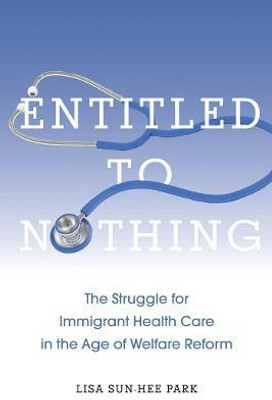
Entitled to Nothing(English, Electronic book text, Park Lisa Sun-Hee)
- Park Lisa Sun-Hee
Paperback & Hardcover deals ―
Amazon IndiaGOFlipkart ₹ 3031SnapdealGOSapnaOnlineGOJain Book AgencyGOBooks Wagon₹1,135Book ChorGOCrosswordGODC BooksGOe-book & Audiobook deals ―
Amazon India GOGoogle Play Books GOAudible GO* Price may vary from time to time.
* GO = We're not able to fetch the price (please check manually visiting the website).
Know about the book -
Entitled to Nothing(English, Electronic book text, Park Lisa Sun-Hee) is written by Park Lisa Sun-Hee and published by New York University Press. It's available with International Standard Book Number or ISBN identification 0814768334 (ISBN 10) and 9780814768334 (ISBN 13).
In Entitled to Nothing, Lisa Sun-Hee Park investigates how the politics of immigration, health care, and welfare are intertwined. Documenting the formal return of the immigrant as a "public charge," or a burden upon the State, the author shows how the concept has been revived as states adopt punitive policies targeting immigrants of color and require them to "pay back" benefits for which they are legally eligible during a time of intense debate regarding welfare reform. Park argues that the notions of "public charge" and "public burden" were reinvigorated in the 1990s to target immigrant women of reproductive age for deportation and as part of a larger project of "disciplining" immigrants. Drawing on nearly 200 interviews with immigrant organizations, government agencies and safety net providers, as well as careful tracking of policies and media coverage, Park provides vivid, first-person accounts of how struggles over the "public charge" doctrine unfolded on the ground, as well as its consequences for the immigrant community. Ultimately, she shows that the concept of "public charge" continues to lurk in the background, structuring our conception of who can legitimately access public programs and of the moral economy of work and citizenship in the U.S., and makes important policy suggestions for reforming our immigration system.
