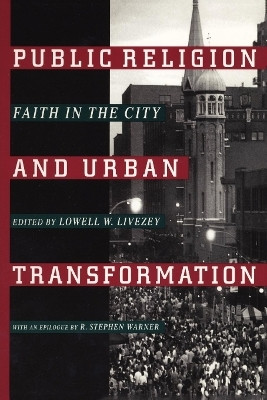
Public Religion and Urban Transformation(English, Paperback, unknown)
- unknown
Paperback & Hardcover deals ―
Amazon IndiaGOFlipkart ₹ 3412SnapdealGOSapnaOnlineGOJain Book AgencyGOBooks Wagon₹296Book ChorGOCrosswordGODC BooksGOe-book & Audiobook deals ―
Amazon India GOGoogle Play Books GOAudible GO* Price may vary from time to time.
* GO = We're not able to fetch the price (please check manually visiting the website).
Know about the book -
Public Religion and Urban Transformation(English, Paperback, unknown) is written by unknown and published by New York University Press. It's available with International Standard Book Number or ISBN identification 081475158X (ISBN 10) and 9780814751589 (ISBN 13).
American cities are in the midst of fundamental changes. De-industrialization of large, aging cities has been enormously disruptive for urban communities, which are being increasingly fragmented. Though often overlooked, religious organizations are important actors, both culturally and politically in the restructuring metropolis. Public Religion and Urban Transformation provides a sweeping view of urban religion in response to these transformations. Drawing on a massive study of over seventy-five congregations in urban neighborhoods, this volume provides the most comprehensive picture available of urban places of worship-from mosques and gurdwaras to churches and synagogues-within one city. Revisiting the primary site of research for the early members of the Chicago School of urban sociology, the volume focuses on Chicago, which provides an exceptionally clear lens on the ways in which religious organizations both reflect and contribute to changes in American pluralism. From the churches of a Mexican American neighborhood and of the Black middle class to communities shared by Jews, Christians, Hindus, and Muslims and the rise of "megachurches," Public Religion and Urban Transformation illuminates the complex interactions among religion, urban structure, and social change at this extraordinary episode in the history of urban America.
