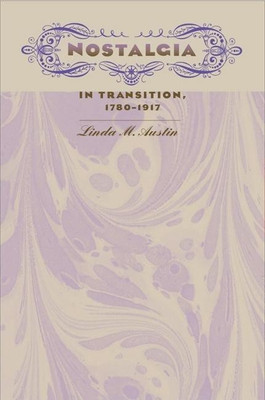
Nostalgia in Transition, 1780-1917(English, Hardcover, Austin Linda M.)
- Austin Linda M.
Paperback & Hardcover deals ―
Amazon IndiaGOFlipkart ₹ 6628SnapdealGOSapnaOnlineGOJain Book AgencyGOBooks Wagon₹303Book ChorGOCrosswordGODC BooksGOe-book & Audiobook deals ―
Amazon India GOGoogle Play Books GOAudible GO* Price may vary from time to time.
* GO = We're not able to fetch the price (please check manually visiting the website).
Know about the book -
Nostalgia in Transition, 1780-1917(English, Hardcover, Austin Linda M.) is written by Austin Linda M. and published by University of Virginia Press. It's available with International Standard Book Number or ISBN identification 0813925983 (ISBN 10) and 9780813925981 (ISBN 13).
Referred to long ago as a ""disease"" of Swiss soldiers and Highland regiments far from home, nostalgia became known in the 1920s as more of a fleeting rather than debilitating condition. Yet, what caused this shift in our collective understanding of the term? In ""Nostalgia in Transition, 1780-1917"", Linda M. Austin traces the development of nostalgia from a memory disorder in the eighteenth century to its modern formulation as a pleasant recreational distraction. Offering a paradigm for and analysis of nostalgic memory as it operates in various attempts to reenact the past, Austin explains both the early and the modern understanding of this phenomenon. Beginning with an account of nostalgia's transformation from an acute form of melancholia and homesickness into elegiac expression and idyllic representation, Austin goes on to examine an array of texts, from poetic meditations on nostalgia in the first half of the nineteenth century to the popular adult souvenirs of childhood in the second half. She shows how, in novels by Hardy; in elegies and lyrics by Arnold, Tennyson, and Emily Bronte; in illustrations by Kate Greenaway and Helen Allingham; and in late Victorian cultural histories of the cottage, nostalgia acts as a collective, rather than an individual reenactment of an invented, rather than a remembered, past or place. For students and scholars interested in the Victorian era, as well as in Romanticism and modernism, ""Nostalgia in Transition"" provides a well-rounded perspective on how and why our understanding of nostalgia has changed over time.
