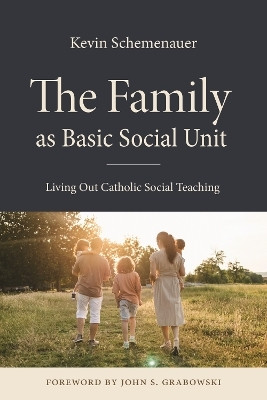
The Family As Basic Social Unit(English, Paperback, Schemenauer Kevin)
- Schemenauer Kevin
Paperback & Hardcover deals ―
Amazon IndiaGOFlipkart ₹ 3732SnapdealGOSapnaOnlineGOJain Book AgencyGOBooks Wagon₹203Book ChorGOCrosswordGODC BooksGOe-book & Audiobook deals ―
Amazon India GOGoogle Play Books GOAudible GO* Price may vary from time to time.
* GO = We're not able to fetch the price (please check manually visiting the website).
Know about the book -
The Family As Basic Social Unit(English, Paperback, Schemenauer Kevin) is written by Schemenauer Kevin and published by The Catholic University of America Press. It's available with International Standard Book Number or ISBN identification 0813237947 (ISBN 10) and 9780813237947 (ISBN 13).
The Family as Basic Social Unit seeks to take seriously the claim that a family is a basic social unit. As a basic social unit, a family is both internally social, and socially interdependent with other communities. Since a family is a basic social unit, Schemenauer proposes that family life is a location for applying Catholic social teaching. Kevin Schemenauer specifically applies Catholic social principles concerning the dignity of work and peacemaking to household labor and violence among siblings, and he reflects on how individuals feed the hungry and care for the sick when they care for their family members. In the second part of the volume, Schemenauer describes the social interdependence of families. He analyzes the relationship between families and the Church, civil society, the economy, and the state. Schemenauer proposes that the question for families is not whether to engage with other social communities but how to do so well. He explicitly highlights how consumer capitalism creates obstacles for families attempting to live as a basic social unit. Then, employing the categories of infused simplicity and moral cooperation, he provides a framework for discerning family engagement with broader society. Finally, Schemenauer analyzes the relationship between family commitments and social ministry. Working from the family outward, Schemenauer describes how family commitments can motivate broader social service, but then employs the example of families involved in the Catholic Worker Movement to reflect on the joys and dangers of balancing commitment to one's family with social ministry focused on the urgent needs of those outside of one's household.
