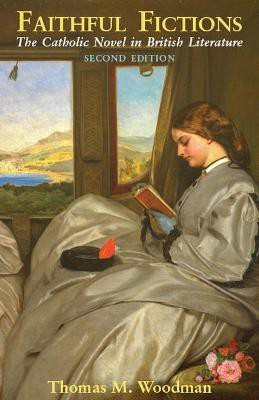
Faithful Fictions(English, Paperback, Woodman Thomas M.)
- Woodman Thomas M.
Paperback & Hardcover deals ―
Amazon IndiaGOFlipkart ₹ 3246SnapdealGOSapnaOnlineGOJain Book AgencyGOBooks Wagon₹324Book ChorGOCrosswordGODC BooksGOe-book & Audiobook deals ―
Amazon India GOGoogle Play Books GOAudible GO* Price may vary from time to time.
* GO = We're not able to fetch the price (please check manually visiting the website).
Know about the book -
Faithful Fictions(English, Paperback, Woodman Thomas M.) is written by Woodman Thomas M. and published by The Catholic University of America Press. It's available with International Standard Book Number or ISBN identification 0813235642 (ISBN 10) and 9780813235646 (ISBN 13).
Catholic writers have made a rich contribution to British fiction, despite their minority status. Evelyn Waugh, Graham Greene, and Muriel Spark are well-known examples, but there are many other significant novelists whose work has a Catholic aspect. This is the first book to survey the whole range of this material and examine whether valid generalizations can be made about it. In charting such fiction from its development in the Victorian period through to the work of contemporaries such as David Lodge, the author analyses its complex relationships with changes in British society and the international Church. There is more than one way of being a Catholic, as Woodman shows, but he also demosntrates that many of these writers share common themes and a distinctive perspective. They often wish in particular to use their religion as a weapon against what they portray as a complacent Protestant or secular society. Their consciousness of writing in the midst of such a society gives a special edge to their treatments of the perennial Catholic themes of suffering, sin and sex. It also has implications for literary form and relates to what has been seen as the extremist mode of Catholic fiction. The final question that Woodman puts is whether the changes in the Church since the Second Vatican Council must inevitably lead to the loss of this distinctive Catholic contribution to the novel.
