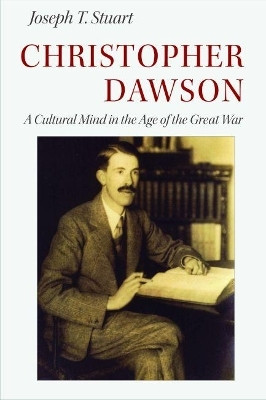
Christopher Dawson(English, Paperback, Stuart Jospeh T.)
- Stuart Jospeh T.
Paperback & Hardcover deals ―
Amazon IndiaGOFlipkart ₹ 3244SnapdealGOSapnaOnlineGOJain Book AgencyGOBooks Wagon₹989Book ChorGOCrosswordGODC BooksGOe-book & Audiobook deals ―
Amazon India GOGoogle Play Books GOAudible GO* Price may vary from time to time.
* GO = We're not able to fetch the price (please check manually visiting the website).
Know about the book -
Christopher Dawson(English, Paperback, Stuart Jospeh T.) is written by Stuart Jospeh T. and published by The Catholic University of America Press. It's available with International Standard Book Number or ISBN identification 0813234573 (ISBN 10) and 9780813234571 (ISBN 13).
The English historian Christopher Dawson (1889-1970) was the first Catholic Studies professor at Harvard University and has been described as one of the foremost Catholic thinkers of modern times. His focus on culture prefigured its importance in Catholicism since Vatican Council II and in the rise of mainstream cultural history in the late twentieth century. How did Dawson think about culture and why does it matter? Joseph T. Stuart argues that through Dawson's study of world cultures, he acquired a "cultural mind" by which he attempted to integrate knowledge according to four implicit rules: intellectual architecture, boundary thinking, intellectual asceticism, and intellectual bridges. Dawson's multilayered approach to culture, instantiating John Henry Newman's philosophical habit of mind, is key to his work and its relevance. By it, he responded to the cultural fragmentation he sensed after the Great War (1914-1918). Stuart supports these claims by demonstrating how Dawson formed his cultural mind practicing an interdisciplinary science of culture involving anthropology, sociology, history, and comparative religion. Stuart shows how Dawson applied his cultural thinking to problems in politics and education. This book establishes how Dawson's simple definition of culture as a "common way of life" reconciles intellectualist and behavioral approaches to culture. In addition, Dawson's cultural mind provides a synthesis helpful for recognizing the importance of Christian culture in education. It demonstrates principles which construct a more meaningful cultural history. Anyone interested in the idea of culture, the connection of religion to the social sciences, Catholic Studies, or Dawson studies will find this book an engaging and insightful intellectual history.
