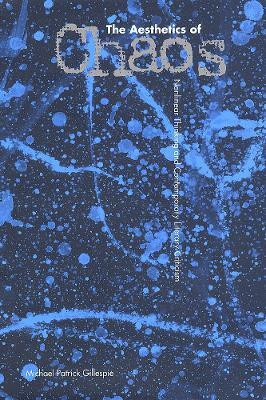
The Aesthetics of Chaos(English, Hardcover, Gillespie Michael Patrick)
- Gillespie Michael Patrick
Paperback & Hardcover deals ―
Amazon IndiaGOFlipkart ₹ 2609SnapdealGOSapnaOnlineGOJain Book AgencyGOBooks Wagon₹143Book ChorGOCrosswordGODC BooksGOe-book & Audiobook deals ―
Amazon India GOGoogle Play Books GOAudible GO* Price may vary from time to time.
* GO = We're not able to fetch the price (please check manually visiting the website).
Know about the book -
The Aesthetics of Chaos(English, Hardcover, Gillespie Michael Patrick) is written by Gillespie Michael Patrick and published by University Press of Florida. It's available with International Standard Book Number or ISBN identification 0813026415 (ISBN 10) and 9780813026411 (ISBN 13).
Michael Patrick Gillespie employs concepts of post-Einsteinian physics as the metaphoric and dialectic foundation for an alternative method of interpreting literature. His central argument revolves around the notion that the most useful literary criticism is that which comes closest to the process of reading. He argues that since our reading is not circumscribed by Cartesian cause-and-effect principles, our literary criticism should not be bound by linear thinking. Drawing examples that range from the ""Book of Job"" to ""Harry Potter and the Sorcerer's Stone"", Gillespie demonstrates how nonlinear perception vastly enhances one's ability to understand diverse forms of literature. Invoking theories from Einstein's views on relativity, quantum mechanics and chaos theories, Gillespie applies his approach to different types of literary works, including a children's fantasy, the Bible, ""The Importance of Being Earnest"", and ""Finnegan's Wake"". In each case, he compares a nonlinear model of criticism with the interpretation of established critical schools, focusing especially on elucidating both the weaknesses in those schools and the multiple legitimate textual meanings in these works. Providing theoretical grounding in the basics of the new sciences, Gillespie draws from the fundamental thinking behind these conceptions of material existence to articulate a paradigm of literary criticism that should be of interest to all literary scholars.
