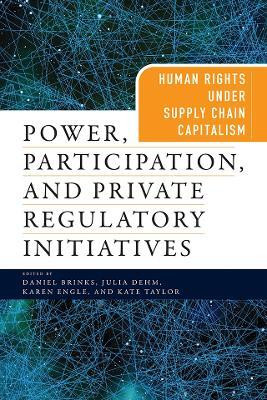
Power, Participation, and Private Regulatory Initiatives(English, Electronic book text, unknown)
- unknown
Paperback & Hardcover deals ―
Amazon IndiaGOFlipkart ₹ 3613SnapdealGOSapnaOnlineGOJain Book AgencyGOBooks Wagon₹209Book ChorGOCrosswordGODC BooksGOe-book & Audiobook deals ―
Amazon India GOGoogle Play Books ₹30Audible GO* Price may vary from time to time.
* GO = We're not able to fetch the price (please check manually visiting the website).
Know about the book -
Power, Participation, and Private Regulatory Initiatives(English, Electronic book text, unknown) is written by unknown and published by University of Pennsylvania Press. It's available with International Standard Book Number or ISBN identification 0812299698 (ISBN 10) and 9780812299694 (ISBN 13).
From unsafe working conditions in garment manufacturing to the failure to consult indigenous communities with regard to extractive industries that affect them, human rights violations remain a pervasive aspect of the global economy. Advocates have long called upon states, as the primary duty bearers and enforcers of human rights, to hold corporations directly accountable for violations committed throughout the supply chain. More recently, many business and human rights advocates have considered the development and enforcement of private regulatory initiatives (PRIs) to certify that actors along the supply chain conform to certain codes of conduct. Many advocates see these PRIs as holding the potential to create better outcomes-whether for workers, affected communities, or the environment-within a global economy structured by supply chain capitalism. This volume brings together academics and practitioners from a number of regions throughout the world to engage in theoretical analysis, case study exploration, and reflection on a variety of PRIs. Theorizing outward from the work of practitioners and activists on the ground, the book brings essential but often overlooked questions to the scholarly debates on business, human rights, and global governance. Ultimately, the contributions coalesce around one basic claim: that the inequalities and disparities of power and wealth that are a key characteristic of the contemporary global economy can also mark the origins and operation of PRIs, and do so to varying degrees. The collection highlights the need for discussions about labor, environmental, and other human rights accountability to be situated within a broader analysis of the political economy of contemporary supply chain capitalism. It seeks to enrich discussions of PRIs by bringing into the conversation concerns about distributive justice and political economy.
