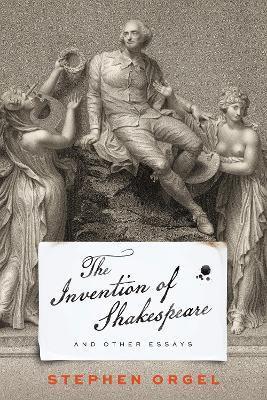
The Invention of Shakespeare, and Other Essays(English, Electronic book text, Orgel Stephen)
- Orgel Stephen
Paperback & Hardcover deals ―
Amazon IndiaGOFlipkart ₹ 2801SnapdealGOSapnaOnlineGOJain Book AgencyGOBooks Wagon₹11,014Book ChorGOCrosswordGODC BooksGOe-book & Audiobook deals ―
Amazon India GOGoogle Play Books ₹14.72Audible GO* Price may vary from time to time.
* GO = We're not able to fetch the price (please check manually visiting the website).
Know about the book -
The Invention of Shakespeare, and Other Essays(English, Electronic book text, Orgel Stephen) is written by Orgel Stephen and published by University of Pennsylvania Press. It's available with International Standard Book Number or ISBN identification 0812298365 (ISBN 10) and 9780812298369 (ISBN 13).
A collection of essays that considers the editorial and interpretive strategies for dealing with complex Shakespearean texts In his own time, Shakespeare was not a monument, but a man of the theater whose plays were less finished artifacts than works in process. In contrast to a book, a thing we have come to think of as final and achieved, a play is a work for performance, with each performance based only in part on a text we call a script. That script may well have had imperfections that the actors may or may not have noticed as they turned it into a performance. There were multiple versions of the scripts and never a "final" one. Every revival of a play-indeed, every subsequent performance-was and always will be different. Nevertheless, when we study Shakespeare, we are likely to come to him via printed texts that are scripts masquerading as books, and the impulse is to turn them into finished artifacts worthy of their author's dignity. In The Invention of Shakespeare, and Other Essays Stephen Orgel brings together twelve essays that consider the complex nature of Shakespearean texts, which often include errors or confusions, and the editorial and interpretive strategies for dealing with them in commentary or performance. "There is always some underlying claim that we are getting back to 'what Shakespeare actually wrote,'" Orgel writes, "but obviously that is not true: we clarify, we modernize, we undo muddles, we correct or explain (or explain away) errors, all in the interests of getting a clear, readable, unproblematic text. In short, we produce the text that we want him to, or think he must have written. But one thing we really do know about Shakespeare's original text is that it was hard to read."
