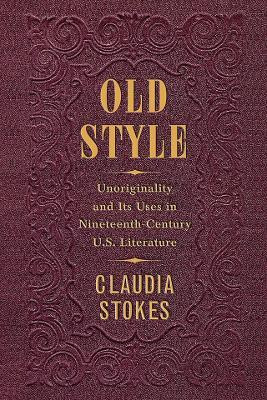
Old Style(English, Hardcover, Stokes Claudia)
- Stokes Claudia
Paperback & Hardcover deals ―
Amazon IndiaGOFlipkart ₹ 8105SnapdealGOSapnaOnlineGOJain Book AgencyGOBooks Wagon₹1,622Book ChorGOCrosswordGODC BooksGOe-book & Audiobook deals ―
Amazon India GOGoogle Play Books GOAudible GO* Price may vary from time to time.
* GO = We're not able to fetch the price (please check manually visiting the website).
Know about the book -
Old Style(English, Hardcover, Stokes Claudia) is written by Stokes Claudia and published by University of Pennsylvania Press. It's available with International Standard Book Number or ISBN identification 0812253531 (ISBN 10) and 9780812253535 (ISBN 13).
An aesthetic of unoriginality shaped literary style and reader taste for decades of the nineteenth century. While critics in the twentieth century and beyond have upheld originality and innovation as essential characteristics of literary achievement, they were not features particularly prized by earlier American audiences, Claudia Stokes contends. On the contrary, readers were taught to value familiarity, traditionalism, and regularity. Literary originality was often seen as a mark of vulgar sensationalism and poor quality. In Old Style Stokes offers the first dedicated study of a forgotten nineteenth-century aesthetic, explicating the forms, practices, conventions, and uses of unoriginality. She focuses in particular on the second quarter of the century, when improvements in printing and distribution caused literary markets to become flooded with new material, and longstanding reading practices came under threat. As readers began to prefer novelty to traditional forms, advocates openly extolled unoriginality in an effort to preserve the old literary ways. Old Style examines this era of significant literary change, during which a once-dominant aesthetic started to give way to modern preferences. If writing in the old style came to be associated with elite conservatism-a linkage that contributed to its decline in the twentieth century-it also, paradoxically provided marginalized writers-people of color, white women, and members of the working class-the literary credentials they needed to enter print. Writing in the old style could affirm an aspiring author's training, command of convention, and respectability. In dismissing unoriginality as the literary purview of the untalented or unambitious, Stokes cautions, we risk overlooking something of vital importance to generations of American writers and readers.
