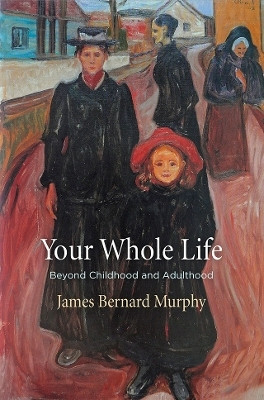
Your Whole Life(English, Hardcover, Murphy James Bernard)
- Murphy James Bernard
Paperback & Hardcover deals ―
Amazon IndiaGOFlipkart ₹ 7663SnapdealGOSapnaOnlineGOJain Book AgencyGOBooks Wagon₹169Book ChorGOCrosswordGODC BooksGOe-book & Audiobook deals ―
Amazon India GOGoogle Play Books GOAudible GO* Price may vary from time to time.
* GO = We're not able to fetch the price (please check manually visiting the website).
Know about the book -
Your Whole Life(English, Hardcover, Murphy James Bernard) is written by Murphy James Bernard and published by University of Pennsylvania Press. It's available with International Standard Book Number or ISBN identification 0812252233 (ISBN 10) and 9780812252231 (ISBN 13).
A holistic view of human development that rejects the conventional stages of childhood, adulthood, and old age When we talk about human development, we tend to characterize it as proceeding through a series of stages in which we are first children, then adolescents, and finally, adults. But as James Bernard Murphy observes, growth is not limited to the young nor is decline limited to the aged. We are never trapped within the horizon of a particular life stage: children anticipate adulthood and adults recapture childhood. According to Murphy, the very idea of stages of life undermines our ability to see our lives as a whole. In Your Whole Life, Murphy asks: what accounts for the unity of a human life over time? He advocates for an unconventional, developmental story of human nature based on a nested hierarchy of three powers-first, each person's unique human genome insures biological identity over time; second, each person's powers of imagination and memory insure psychological identity over time; and, third, each person's ability to tell his or her own life story insures narrative identity over time. Just as imagination and memory rely upon our biological identity, so our autobiographical stories rest upon our psychological identity. Narrative is not the foundation of personal identity, as many argue, but its capstone. Engaging with the work of Aristotle, Augustine, Jesus, and Rousseau, as well as with the contributions of contemporary evolutionary biologists and psychologists, Murphy challenges the widely shared assumptions in Western thinking about personhood and its development through discrete stages of childhood, adulthood, and old age. He offers, instead, a holistic view in which we are always growing and declining, always learning and forgetting, and always living and dying, and finds that only in relation to one's whole life does the passing of time obtain meaning.
