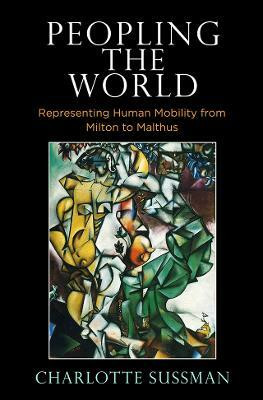
Peopling the World(English, Hardcover, Sussman Charlotte)
- Sussman Charlotte
Paperback & Hardcover deals ―
Amazon IndiaGOFlipkart ₹ 8177SnapdealGOSapnaOnlineGOJain Book AgencyGOBooks Wagon₹1,372Book ChorGOCrosswordGODC BooksGOe-book & Audiobook deals ―
Amazon India GOGoogle Play Books GOAudible GO* Price may vary from time to time.
* GO = We're not able to fetch the price (please check manually visiting the website).
Know about the book -
Peopling the World(English, Hardcover, Sussman Charlotte) is written by Sussman Charlotte and published by University of Pennsylvania Press. It's available with International Standard Book Number or ISBN identification 0812252020 (ISBN 10) and 9780812252026 (ISBN 13).
A compelling study of views about population and demographic mobility in the British long eighteenth century In John Milton's Paradise Lost of 1667, Adam and Eve are promised they will produce a "race to fill the world," a thought that consoles them even after the trauma of the fall. By 1798, the idea that the world would one day be entirely filled by people had become, in Thomas Malthus's hands, a nightmarish vision. In Peopling the World, Charlotte Sussman asks how and why this shift took place. How did Britain's understanding of the value of reproduction, the vacancy of the planet, and the necessity of moving people around to fill its empty spaces change? Sussman addresses these questions through readings of texts by Malthus, Milton, Swift, Defoe, Goldsmith, Sir Walter Scott, Mary Shelley, and others, and by placing these authors in the context of debates about scientific innovation, emigration, cultural memory, and colonial settlement. Sussman argues that a shift in thinking about population and mobility occurred in the third quarter of the eighteenth century. Before that point, both political and literary texts were preoccupied with "useless" populations that could be made useful by being dispersed over Britain's domestic and colonial territories; after 1760, a concern with the depopulation caused by emigration began to take hold. She explains this change in terms of the interrelated developments of a labor theory of value, a new idea of national identity after the collapse of Britain's American empire, and a move from thinking of reproduction as a national resource to thinking of it as an individual choice. She places Malthus at the end of this history because he so decisively moved thinking about population away from a worldview in which there was always more space to be filled and toward the temporal inevitability of the whole world filling up with people.
