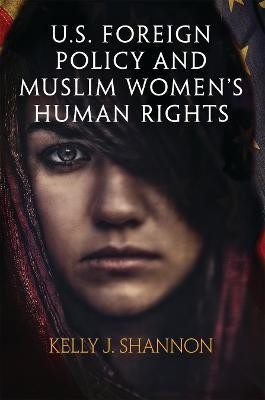
U.S. Foreign Policy and Muslim Women's Human Rights(English, Hardcover, Shannon Kelly J.)
- Shannon Kelly J.
Paperback & Hardcover deals ―
Amazon IndiaGOFlipkart ₹ 7179SnapdealGOSapnaOnlineGOJain Book AgencyGOBooks Wagon₹1,697Book ChorGOCrosswordGODC BooksGOe-book & Audiobook deals ―
Amazon India GOGoogle Play Books GOAudible GO* Price may vary from time to time.
* GO = We're not able to fetch the price (please check manually visiting the website).
Know about the book -
U.S. Foreign Policy and Muslim Women's Human Rights(English, Hardcover, Shannon Kelly J.) is written by Shannon Kelly J. and published by University of Pennsylvania Press. It's available with International Standard Book Number or ISBN identification 0812249674 (ISBN 10) and 9780812249675 (ISBN 13).
A fresh interpretation of U.S. relations with the Muslim world since 1979 Americans' concerns about women's human rights in Muslim countries were triggered by the Iranian Revolution of 1979 and have evolved within the context of long-standing Western stereotypes about Muslims, as well as transnational feminism and the global human rights movement. As these frameworks simultaneously competed against and reinforced one another, U.S. public conversations about Muslim women intensified, culminating in feminist campaigns and U.S. policies that aimed to defend women's rights in Islamic countries-such was the case with the Clinton administration's decision not to recognize the Taliban regime after they seized control of Afghanistan in 1996. U.S. Foreign Policy and Muslim Women's Human Rights provides a fresh interpretation of U.S. relations with the Muslim world and, more broadly, U.S. foreign relations history and the history of human rights. Kelly J. Shannon argues that, as U.S. attention to the Middle East and other Muslim-majority regions became more focused and sustained, the issue of women's human rights in Islamic societies was one that Americans gradually identified as vitally important to U.S. foreign policy. Based on an analysis of a wide range of sources-including U.S. government and United Nations documents, oral histories, NGO archival records, news media, scholarship, films and television, and novels-and a wide range of actors including journalists, academics, activists, NGOs, the public, Muslim women, Islamic fundamentalists, and U.S. policymakers-the book challenges traditional interpretations of U.S. foreign policy that assert the primacy of "hard power" concerns in U.S. decision making. By reframing U.S.-Islamic relations with respect to women's rights, and revealing faulty assumptions about the drivers of U.S. foreign policy, Shannon sheds new light on U.S. identity and policy creation and alters the standard narratives of the U.S. relationship with the Muslim world in the closing years of the Cold War and the emergence of the post-Cold War era.
