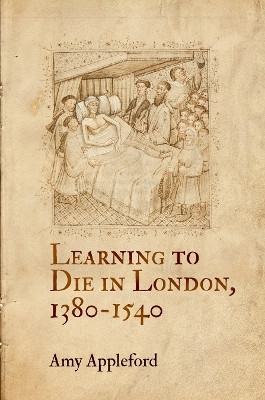
Learning to Die in London, 1380-1540(English, Hardcover, Appleford Amy)
- Appleford Amy
Paperback & Hardcover deals ―
Amazon IndiaGOFlipkart ₹ 8213SnapdealGOSapnaOnlineGOJain Book AgencyGOBooks Wagon₹186Book ChorGOCrosswordGODC BooksGOe-book & Audiobook deals ―
Amazon India GOGoogle Play Books GOAudible GO* Price may vary from time to time.
* GO = We're not able to fetch the price (please check manually visiting the website).
Know about the book -
Learning to Die in London, 1380-1540(English, Hardcover, Appleford Amy) is written by Appleford Amy and published by University of Pennsylvania Press. It's available with International Standard Book Number or ISBN identification 0812246691 (ISBN 10) and 9780812246698 (ISBN 13).
Taking as her focus a body of writings in poetic, didactic, and legal modes that circulated in England's capital between the 1380s-just a generation after the Black Death-and the first decade of the English reformation in the 1530s, Amy Appleford offers the first full-length study of the Middle English "art of dying" (ars moriendi). An educated awareness of death and mortality was a vital aspect of medieval civic culture, she contends, critical not only to the shaping of single lives and the management of families and households but also to the practices of cultural memory, the building of institutions, and the good government of the city itself. In fifteenth-century London in particular, where an increasingly laicized reformist religiosity coexisted with an ambitious program of urban renewal, cultivating a sophisticated attitude toward death was understood as essential to good living in the widest sense. The virtuous ordering of self, household, and city rested on a proper attitude toward mortality on the part both of the ruled and of their secular and religious rulers. The intricacies of keeping death constantly in mind informed not only the religious prose of the period, but also literary and visual arts. In London's version of the famous image-text known as the Dance of Death, Thomas Hoccleve's poetic collection The Series, and the early sixteenth-century prose treatises of Tudor writers Richard Whitford, Thomas Lupset, and Thomas More, death is understood as an explicitly generative force, one capable (if properly managed) of providing vital personal, social, and literary opportunities.
