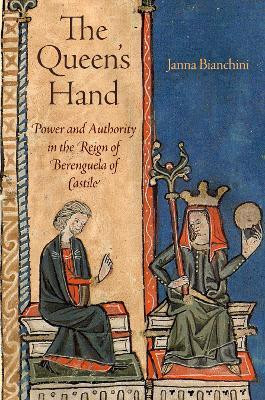
The Queen's Hand(English, Electronic book text, Bianchini Janna)
- Bianchini Janna
Paperback & Hardcover deals ―
Amazon IndiaGOFlipkart ₹ 2692SnapdealGOSapnaOnlineGOJain Book AgencyGOBooks Wagon₹293Book ChorGOCrosswordGODC BooksGOe-book & Audiobook deals ―
Amazon India GOGoogle Play Books ₹76Audible GO* Price may vary from time to time.
* GO = We're not able to fetch the price (please check manually visiting the website).
Know about the book -
The Queen's Hand(English, Electronic book text, Bianchini Janna) is written by Bianchini Janna and published by University of Pennsylvania Press. It's available with International Standard Book Number or ISBN identification 0812206266 (ISBN 10) and 9780812206265 (ISBN 13).
Her name is undoubtedly less familiar than that of her grandmother, Eleanor of Aquitaine, or that of her famous conqueror son, Fernando III, yet during her lifetime, Berenguela of Castile (1180-1246) was one of the most powerful women in Europe. As queen-consort of Alfonso IX of LeOn, she acquired the troubled boundary lands between the kingdoms of Castile and LeOn and forged alliances with powerful nobles on both sides. Even after her marriage was dissolved, she continued to strengthen these connections as a member of her father's court. On her brother's death, she inherited the Castilian throne outright-and then, remarkably, elevated her son to kingship at the same time. Using her assiduously cultivated alliances, Berenguela ruled alongside Fernando and set into motion the strategy that in 1230 would result in his acquisition of the crown of LeOn-and the permanent union of Castile and LeOn. In The Queen's Hand, Janna Bianchini explores Berenguela's extraordinary lifelong partnership with her son and examines the means through which she was able to build and exercise power. Bianchini contends that recognition of Berenguela as a powerful reigning queen by nobles, bishops, ambassadors, and popes shows the key participation of royal women in the western Iberian monarchy. Demonstrating how royal women could wield enormous authority both within and outside their kingdoms, Bianchini reclaims Berenguela's place as one of the most important figures of the Iberian Middle Ages.
