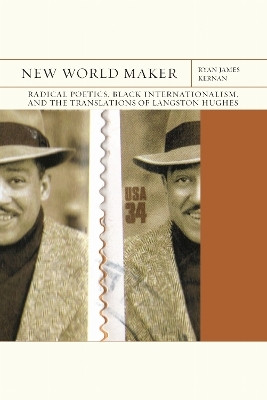
New World Maker Volume 40(English, Paperback, Kernan Ryan James)
- Kernan Ryan James
Paperback & Hardcover deals ―
Amazon IndiaGOFlipkart ₹ 5827SnapdealGOSapnaOnlineGOJain Book AgencyGOBooks Wagon₹471Book ChorGOCrosswordGODC BooksGOe-book & Audiobook deals ―
Amazon India GOGoogle Play Books ₹39.95Audible GO* Price may vary from time to time.
* GO = We're not able to fetch the price (please check manually visiting the website).
Know about the book -
New World Maker Volume 40(English, Paperback, Kernan Ryan James) is written by Kernan Ryan James and published by Northwestern University Press. It's available with International Standard Book Number or ISBN identification 0810144425 (ISBN 10) and 9780810144422 (ISBN 13).
In an ambitious reappraisal of Langston Hughes's work and legacy, Ryan James Kernan reads Hughes's political poetry in the context of his practice of translation to reveal an important meditation on diaspora. Drawing on heretofore unearthed archival evidence, Kernan shows how Hughes mined his engagements with the poetics of Louis Aragon, Nicolas Guillen, Regino Pedroso, Vladimir Mayakovsky, Federico Garcia Lorca, and Leopold Sedar Senghor, as well as translations of his own poetry, to fashion a radical poetics that engaged Black left internationalist concerns. As he follows Hughes from Harlem to Havana, Moscow, Madrid, and finally to Dakar, Kernan reveals how the writer's identity and aesthetic were translated within these leftist geographies and metropoles, by others but also collaboratively. As Kernan argues, we cannot know Hughes without knowing him in translation. Through original research and close readings alert to the foreign prosody underlying Hughes's work, New World Maker recuperates his political writing, which had been widely maligned by Cold War detractors and adherents of New Criticism, and affirms his place as a progenitor of African diasporic literature and within the pantheon of US modernists. Demonstrating the integral part translation played in Hughes's creative process, this book challenges a number of common assumptions about this canonical thinker and offers important insights for scholars of African diasporic literature, comparative literature, and American, Caribbean, and translation studies.
