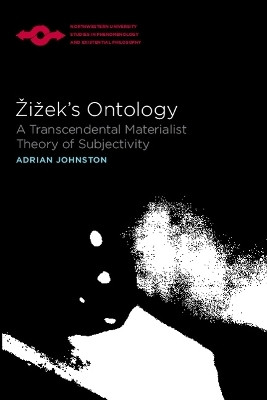
Zizek's Ontology(English, Paperback, Johnston Adrian)
- Johnston Adrian
Paperback & Hardcover deals ―
Amazon IndiaGOFlipkart ₹ 3232SnapdealGOSapnaOnlineGOJain Book AgencyGOBooks Wagon₹979Book ChorGOCrosswordGODC BooksGOe-book & Audiobook deals ―
Amazon India GOGoogle Play Books ₹29.95Audible GO* Price may vary from time to time.
* GO = We're not able to fetch the price (please check manually visiting the website).
Know about the book -
Zizek's Ontology(English, Paperback, Johnston Adrian) is written by Johnston Adrian and published by Northwestern University Press. It's available with International Standard Book Number or ISBN identification 0810124564 (ISBN 10) and 9780810124561 (ISBN 13).
Slavoj Zizek is one of the most interesting and important philosophers working today, known chiefly for his theoretical explorations of popular culture and contemporary politics. This book focuses on the generally neglected and often overshadowed philosophical core of Zizek's work - an essential component in any true appreciation of this unique thinker's accomplishment. His central concern, Zizek has proclaimed, is to use psychoanalysis (especially the teachings of Jacques Lacan) to redeploy the insights of late-modern German philosophy, in particular, the thought of Kant, Schelling, and Hegel. By taking this avowal seriously, Adrian Johnston finally clarifies the philosophical project underlying Zizek's efforts. His book charts the interlinked ontology and theory of subjectivity constructed by Zizek at the intersection of German idealism and Lacanian theory. Johnston also uses Zizek's combination of philosophy and psychoanalysis to address two perennial philosophical problems: the relationship of mind and body, and the nature of human freedom.By bringing together the past two centuries of European philosophy, psychoanalytic metapsychology, and cutting-edge work in the natural sciences, Johnston develops a transcendental materialist theory of subjectivity - in short, an account of how more-than-material forms of subjectivity can emerge from a corporeal being. His work shows how an engagement with Zizek's philosophy can produce compelling answers to today's most vexing and urgent questions as inherited from the history of ideas.
