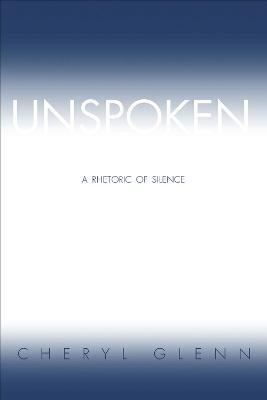
Unspoken(English, Paperback, Glenn Cheryl)
- Glenn Cheryl
Paperback & Hardcover deals ―
Amazon IndiaGOFlipkart ₹ 3400SnapdealGOSapnaOnlineGOJain Book AgencyGOBooks Wagon₹1,237Book ChorGOCrosswordGODC BooksGOe-book & Audiobook deals ―
Amazon India GOGoogle Play Books ₹16.5Audible GO* Price may vary from time to time.
* GO = We're not able to fetch the price (please check manually visiting the website).
Know about the book -
Unspoken(English, Paperback, Glenn Cheryl) is written by Glenn Cheryl and published by Southern Illinois University Press. It's available with International Standard Book Number or ISBN identification 0809325845 (ISBN 10) and 9780809325849 (ISBN 13).
In our talkative Western culture, speech is synonymous with authority and influence while silence is frequently misheard as passive agreement when it often signifies much more. In her groundbreaking exploration of silence as a significant rhetorical art, Cheryl Glenn articulates the ways in which tactical silence can be as expressive and strategic an instrument of human communication as speech itself. Drawing from linguistics, phenomenology, feminist studies, anthropology, ethnic studies, and literary analysis, Unspoken: A Rhetoric of Silence theorizes both a cartography and grammar of silence. By mapping the range of spaces silence inhabits, Glenn offers a new interpretation of its complex variations and uses. Glenn contextualizes the rhetoric of silence by focusing on selected contemporary examples. Listening to silence and voice as gendered positions, she analyzes the highly politicized silences and words of a procession of figures she refers to as "all the President's women," including Anita Hill, Lani Guiner, Gennifer Flowers, and Chelsea Clinton. She also turns an investigative ear to the cultural taciturnity attributed to various Native American groups-Navajo, Apache, Hopi, and Pueblo-and its true meaning. Through these examples, Glenn reinforces the rhetorical contributions of the unspoken, codifying silence as a rhetorical device with the potential to deploy, defer, and defeat power. Unspoken concludes by suggesting opportunities for further research into silence and silencing, including music, religion, deaf communities, cross-cultural communication, and the circulation of silence as a creative resource within the college classroom and for college writers.
