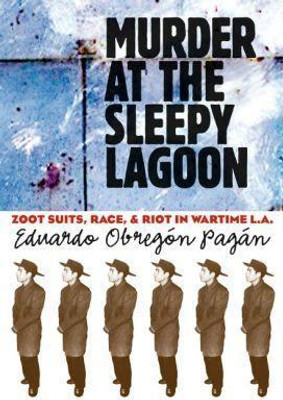
Murder at the Sleepy Lagoon(English, Paperback, Pagan Eduardo Obregon)
- Pagan Eduardo Obregon
Paperback & Hardcover deals ―
Amazon IndiaGOFlipkart ₹ 4176SnapdealGOSapnaOnlineGOJain Book AgencyGOBooks Wagon₹339Book ChorGOCrosswordGODC BooksGOe-book & Audiobook deals ―
Amazon India GOGoogle Play Books GOAudible GO* Price may vary from time to time.
* GO = We're not able to fetch the price (please check manually visiting the website).
Know about the book -
Murder at the Sleepy Lagoon(English, Paperback, Pagan Eduardo Obregon) is written by Pagan Eduardo Obregon and published by The University of North Carolina Press. It's available with International Standard Book Number or ISBN identification 0807854948 (ISBN 10) and 9780807854945 (ISBN 13).
The notorious 1942 ""Sleepy Lagoon"" murder trial in Los Angeles concluded with the conviction of 17 young Mexican American men for the alleged gang slaying of fellow youth Jose Diaz. Just five months later, the so-called Zoot Suit Riot erupted, as white soldiers in the city attacked minority youths and burned their distinctive zoot suits. Eduardo Obregon Pagan provides a comprehensive social history of both the trial and the riot and argues that they resulted from a volatile mix of racial and social tensions that had long been simmering. In reconstructing the lives of the murder victim and those accused of the crime, Pagan contends that neither the convictions (which were based on little hard evidence) nor the ensuing riot arose simply from anti-Mexican sentiment. He demonstrates instead that a variety of pre-existing stresses, including demographic pressures, anxiety about nascent youth culture, and the war effort all contributed to the social tension and the eruption of violence. Moreover, he recovers a multidimensional picture of Los Angeles during World War II that incorporates the complex intersections of music, fashion, violence, race relations and neighbourhood activism. Drawing upon overlooked evidence, Pagan concludes by reconstructing the murder scene and proposes a theory about what really happened the night of the murder.
