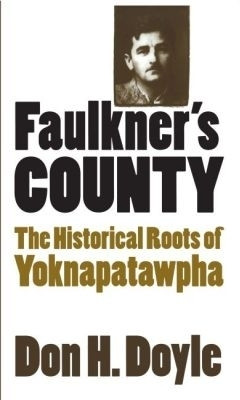
Faulkner's County(English, Paperback, Doyle Don H.)
- Doyle Don H.
Paperback & Hardcover deals ―
Amazon IndiaGOFlipkart ₹ 5441SnapdealGOSapnaOnlineGOJain Book AgencyGOBooks Wagon₹10,900Book ChorGOCrosswordGODC BooksGOe-book & Audiobook deals ―
Amazon India GOGoogle Play Books GOAudible GO* Price may vary from time to time.
* GO = We're not able to fetch the price (please check manually visiting the website).
Know about the book -
Faulkner's County(English, Paperback, Doyle Don H.) is written by Doyle Don H. and published by The University of North Carolina Press. It's available with International Standard Book Number or ISBN identification 0807849316 (ISBN 10) and 9780807849316 (ISBN 13).
The rich history behind Faulkner's imagined world Lafayette County, Mississippi, was the primary inspiration for what is arguably the most famous place in American fiction: William Faulkner's Yoknapatawpha County. Faulkner once explained that in his Yoknapatawpha stories he ""sublimated the actual into the apocryphal."" This history of Lafayette County reverses that notion, using Faulkner's rich fictional portrait of a place and its people to illuminate the past. From the arrival of Europeans in Chickasaw Indian territory in 1540 to Faulkner's death in 1962, Don Doyle chronicles more than four centuries of local history. He traces the building of a permanent community and plantation economy by white settlers, the lives of slaves in the region, the experiences of secession, Civil War, and Reconstruction, town life in Oxford, and the ""Revolt of the Rednecks"" Faulkner captured in his saga of the Snopes clan. Drawing on both history and literature, Doyle renders a rich and deeply researched portrait of Faulkner's home. ""Yoknapatawpha was a place of the imagination, invented by Faulkner as a vehicle for developing a coherent body of fiction,"" Doyle writes, ""but the raw materials from which he created this place and its people lay right at his front porch.
