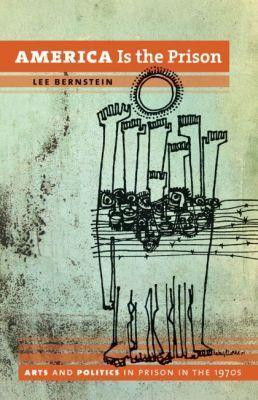
America Is the Prison(English, Hardcover, Bernstein Lee)
- Bernstein Lee
Paperback & Hardcover deals ―
Amazon IndiaGOFlipkart ₹ 3398SnapdealGOSapnaOnlineGOJain Book AgencyGOBooks Wagon₹2,588Book ChorGOCrosswordGODC BooksGOe-book & Audiobook deals ―
Amazon India GOGoogle Play Books GOAudible GO* Price may vary from time to time.
* GO = We're not able to fetch the price (please check manually visiting the website).
Know about the book -
America Is the Prison(English, Hardcover, Bernstein Lee) is written by Bernstein Lee and published by The University of North Carolina Press. It's available with International Standard Book Number or ISBN identification 0807833878 (ISBN 10) and 9780807833872 (ISBN 13).
In the 1970s, while politicians and activists outside prisons debated the proper response to crime, incarcerated people helped shape those debates though a broad range of remarkable political and literary writings. Lee Bernstein explores the forces that sparked a dramatic ""prison art renaissance,"" shedding light on how incarcerated people produced powerful works of writing, performance, and visual art. These included everything from George Jackson's revolutionary Soledad Brother to Miguel Pinero's acclaimed off-Broadway play and Hollywood film Short Eyes. An extraordinary range of prison programs--fine arts, theater, secondary education, and prisoner-run programs--allowed the voices of prisoners to influence the Black Arts Movement, the Nuyorican writers, ""New Journalism,"" and political theater, among the most important aesthetic contributions of the decade. By the 1980s and '90s, prisoners' educational and artistic programs were scaled back or eliminated as the ""war on crime"" escalated. But by then these prisoners' words had crossed over the wall, helping many Americans to rethink the meaning of the walls themselves and, ultimately, the meaning of the society that produced them. By the 1980s and '90s, prisoners' educational and artistic programs were scaled back or eliminated as the ""war on crime"" escalated. But by then these prisoners' words had crossed over the wall, helping many Americans to rethink the meaning of the walls themselves and, ultimately, the meaning of the society that produced them.
