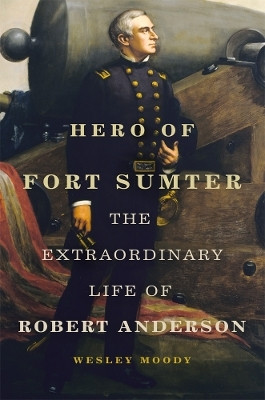
Hero of Fort Sumter Volume 80(English, Hardcover, Moody Wesley)
- Moody Wesley
Paperback & Hardcover deals ―
Amazon IndiaGOFlipkart ₹ 3582SnapdealGOSapnaOnlineGOJain Book AgencyGOBooks Wagon₹628Book ChorGOCrosswordGODC BooksGOe-book & Audiobook deals ―
Amazon India GOGoogle Play Books GOAudible GO* Price may vary from time to time.
* GO = We're not able to fetch the price (please check manually visiting the website).
Know about the book -
Hero of Fort Sumter Volume 80(English, Hardcover, Moody Wesley) is written by Moody Wesley and published by University of Oklahoma Press. It's available with International Standard Book Number or ISBN identification 0806195401 (ISBN 10) and 9780806195407 (ISBN 13).
As the commander of the U.S. garrison at Fort Sumter in the fateful early hours of April 12, 1861, Robert Anderson (1805-71) played a critical role in the unfolding of the Civil War. Although his leadership and his courage under fire catapulted him into national recognition, the attack on Fort Sumter was just one chapter in Anderson's story. That story, told here in full for the first time, offers a unique lens on the development of the US military and the country itself before and during the Civil War. Anderson's family, harking back to the nation's founding, included William Clark (of Lewis and Clark fame) and Chief Justice John Marshal. His father crossed the Delaware with George Washington. And among his acquaintances were presidents ranging from the aged John Adams to seven-year-old Theodore Roosevelt. Historian Wesley Moody charts Robert Anderson's path from an upbringing on the Kentucky frontier to a West Point education and a military career that saw him fighting in nearly every American conflict from the Black Hawk War to the Civil War-catching malaria fighting the Seminoles, taking several bullets while serving in Mexico, writing the textbook for field artillery used by both Union and Confederate forces, mentoring William Tecumseh Sherman. Central to Anderson's story was his deft and decisive handling of the Fort Sumter crisis. Had Major Anderson been the aggressor, as many of his command urged, President Abraham Lincoln would have been unable to rally the Northern states to war. Had Anderson handed his command over to the Confederate troops, a demoralized North would have offered little resistance to secession. To understand this pivotal moment in U.S. history, one has to understand the man at its center; and to understand that man and his masterful performance under extraordinary pressure, one can do no better than to read Moody's thoroughly absorbing, richly detailed biography.
