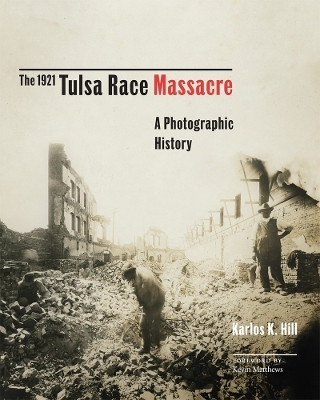
The 1921 Tulsa Race Massacre(English, Hardcover, Hill Karlos K.)
- Hill Karlos K.
Paperback & Hardcover deals ―
Amazon IndiaGOFlipkart ₹ 3365SnapdealGOSapnaOnlineGOJain Book AgencyGOBooks Wagon₹2,224Book ChorGOCrosswordGODC BooksGOe-book & Audiobook deals ―
Amazon India GOGoogle Play Books GOAudible GO* Price may vary from time to time.
* GO = We're not able to fetch the price (please check manually visiting the website).
Know about the book -
The 1921 Tulsa Race Massacre(English, Hardcover, Hill Karlos K.) is written by Hill Karlos K. and published by University of Oklahoma Press. It's available with International Standard Book Number or ISBN identification 0806168560 (ISBN 10) and 9780806168562 (ISBN 13).
On the evening of May 31, 1921, and in the early morning hours of June 1, several thousand white citizens and authorities violently attacked the African American Greenwood District of Tulsa, Oklahoma. In the course of some twelve hours of mob violence, white Tulsans reduced one of the nation's most prosperous black communities to rubble and killed an estimated 300 people, mostly African Americans. This richly illustrated volume, featuring more than 175 photographs, along with oral testimonies, shines a new spotlight on the race massacre from the vantage point of its victims and survivors. Historian and Black Studies professor Karlos K. Hill presents a range of photographs taken before, during, and after the massacre, mostly by white photographers. Some of the images are published here for the first time. Comparing these photographs to those taken elsewhere in the United States of lynchings, the author makes a powerful case for terming the 1921 outbreak not a riot but a massacre. White civilians, in many cases assisted or condoned by local and state law enforcement, perpetuated a systematic and coordinated attack on Black Tulsans and their property. Despite all the violence and devastation, black Tulsans rebuilt the Greenwood District brick by brick. By the mid-twentieth century, Greenwood had reached a new zenith, with nearly 250 Black-owned and Black-operated businesses. Today the citizens of Greenwood, with support from the broader community, continue to work diligently to revive the neighborhood once known as 'Black Wall Street.' As a result, Hill asserts, the most important legacy of the Tulsa Race Massacre is the grit and resilience of the Black survivors of racist violence. The 1921 Tulsa Race Massacre: A Photographic History offers a perspective largely missing from other accounts. At once captivating and disturbing, it will embolden readers to confront the uncomfortable legacy of racial violence in U.S. history.
