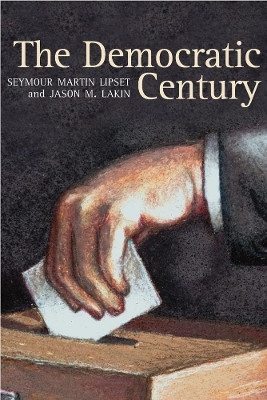
The Democratic Century(English, Hardcover, Lipset Seymour Martin)
- Lipset Seymour Martin
Paperback & Hardcover deals ―
Amazon IndiaGOFlipkart ₹ 4595SnapdealGOSapnaOnlineGOJain Book AgencyGOBooks Wagon₹716Book ChorGOCrosswordGODC BooksGOe-book & Audiobook deals ―
Amazon India GOGoogle Play Books GOAudible GO* Price may vary from time to time.
* GO = We're not able to fetch the price (please check manually visiting the website).
Know about the book -
The Democratic Century(English, Hardcover, Lipset Seymour Martin) is written by Lipset Seymour Martin and published by University of Oklahoma Press. It's available with International Standard Book Number or ISBN identification 0806136189 (ISBN 10) and 9780806136189 (ISBN 13).
Where and why was democracy successful in the twentieth century? In The Democratic Century, Seymour Martin Lipset and Jason Lakin combine social, cultural, economic, and institutional analyses to explain why democracy has succeeded in some countries and failed in others. Defining democracy as a political system in which all adults may vote in contested elections to choose their representatives, Lipset and Lakin argue that the mainstays of a successful system are institutions that encourage the diffusion of power - such as competitive parties, an independent civil society, and federalist arrangements. But central to their argument is the notion that culture, at least as much as any other variable, is responsible for the establishment of democracy. The authors' concept of culture is not static, however. They argue that, because cultures interact with social, economic, and political variables, they can change and become compatible with democracy. Consequently, Lipset and Lakin hope for a democratic twenty-first century. The Democratic Century revisits theories from Lipset's earlier works, including the classics Agrarian Socialism and Political Man. But the authors do more than update Lipset's work; they offer an expansive view of democratic systems and of the vast body of relevant literature.
