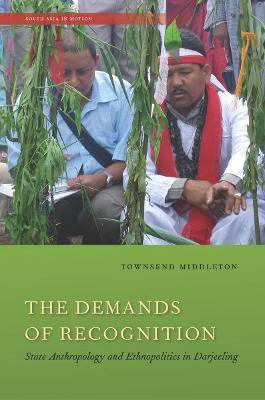
The Demands of Recognition(English, Electronic book text, Middleton Townsend)
- Middleton Townsend
Paperback & Hardcover deals ―
Amazon IndiaGOFlipkart ₹ 2618SnapdealGOSapnaOnlineGOJain Book AgencyGOBooks Wagon₹1,967Book ChorGOCrosswordGODC BooksGOe-book & Audiobook deals ―
Amazon India GOGoogle Play Books ₹15.12Audible GO* Price may vary from time to time.
* GO = We're not able to fetch the price (please check manually visiting the website).
Know about the book -
The Demands of Recognition(English, Electronic book text, Middleton Townsend) is written by Middleton Townsend and published by Stanford University Press. It's available with International Standard Book Number or ISBN identification 0804796300 (ISBN 10) and 9780804796309 (ISBN 13).
Since the British colonial period anthropology has been central to policy in India. But today, while the Indian state continues to use ethnography to govern, those who were the "objects" of study are harnessing disciplinary knowledge to redefine their communities, achieve greater prosperity, and secure political rights. In this groundbreaking study, Townsend Middleton tracks these newfound "lives" of anthropology. Offering simultaneous ethnographies of the people of Darjeeling's quest for "tribal" status and the government anthropologists handling their claims, Middleton exposes how minorities are-and are not-recognized for affirmative action and autonomy. We encounter communities putting on elaborate spectacles of sacrifice, exorcism, bows and arrows, and blood drinking to prove their "primitiveness" and "backwardness." Conversely, we see government anthropologists struggle for the ethnographic truth as communities increasingly turn academic paradigms back upon the state. The Demands of Recognition offers a compelling look at the escalating politics of tribal recognition in India. At once ethnographic and historical, it chronicles how multicultural governance has motivated the people of Darjeeling to ethnologically redefine themselves-from Gorkha to tribal and back. But as these communities now know, not all forms of difference are legible in the eyes of the state. The Gorkhas' search for recognition has only amplified these communities' anxieties about who they are-and who they must be-if they are to attain the rights, autonomy, and belonging they desire.
