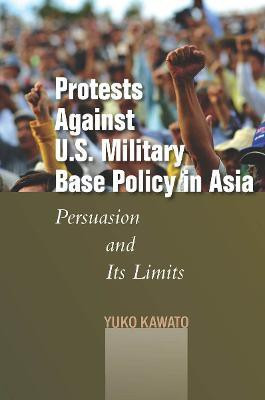
Protests Against U.S. Military Base Policy in Asia(English, Electronic book text, Kawato Yuko)
- Kawato Yuko
Paperback & Hardcover deals ―
Amazon IndiaGOFlipkart ₹ 2727SnapdealGOSapnaOnlineGOJain Book AgencyGOBooks Wagon₹223Book ChorGOCrosswordGODC BooksGOe-book & Audiobook deals ―
Amazon India GOGoogle Play Books ₹48Audible GO* Price may vary from time to time.
* GO = We're not able to fetch the price (please check manually visiting the website).
Know about the book -
Protests Against U.S. Military Base Policy in Asia(English, Electronic book text, Kawato Yuko) is written by Kawato Yuko and published by Stanford University Press. It's available with International Standard Book Number or ISBN identification 080479538X (ISBN 10) and 9780804795388 (ISBN 13).
Since the end of World War II, protests against U.S. military base and related policies have occurred in several Asian host countries. How much influence have these protests had on the p;olicy regarding U.S. military bases? What conditions make protests more likely to influence policy? Protests Against U.S. Military Base Policy in Asia answers these questions by examining state response to twelve major protests in Asia since the end of World War II-in the Philippines, Okinawa, and South Korea. Yuko Kawato lays out the conditions under which protesters' normative arguments can and cannot persuade policy-makers to change base policy, and how protests can still generate some political or military incentives for policy-makers to adjust policy when persuasion fails. Kawato also shows that when policy-makers decide not to change policy, they can offer symbolic concessions to appear norm-abiding and to secure a smoother implementation of policies that protesters oppose. While the findings will be of considerable interest to academics and students, perhaps their largest impact will be on policy makers and activists, for whom Kawato offers recommendations for their future decision-making and actions.
