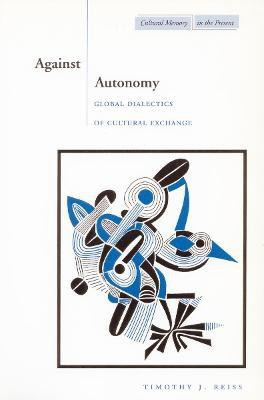
Against Autonomy(English, Paperback, Reiss Timothy J.)
- Reiss Timothy J.
Paperback & Hardcover deals ―
Amazon IndiaGOFlipkart ₹ 3461SnapdealGOSapnaOnlineGOJain Book AgencyGOBooks Wagon₹711Book ChorGOCrosswordGODC BooksGOe-book & Audiobook deals ―
Amazon India GOGoogle Play Books GOAudible GO* Price may vary from time to time.
* GO = We're not able to fetch the price (please check manually visiting the website).
Know about the book -
Against Autonomy(English, Paperback, Reiss Timothy J.) is written by Reiss Timothy J. and published by Stanford University Press. It's available with International Standard Book Number or ISBN identification 0804743509 (ISBN 10) and 9780804743501 (ISBN 13).
This book investigates "cultural instruments," meaning normative forms of analysis and practice that are central to Western culture and in the course of their history came to be ways of understanding and controlling different cultures. Examples are: notions of autonomy and the division of intellectual, social, cultural, and aesthetic practices; ideas of otherness (taking forms like Gemeinschaft/Gesellschaft, negritude, and afrocentrism); cultural and aesthetic forms such as tragedy, mimesis, self, mind/body; certain modes of history and memory; and particular forms of discourse such as science, philosophy, and literature. The book explores the interlocking histories of cultural instruments from antiquity to the early Enlightenment and their instrumental use and reworking by different cultures, moving from Europe to Africa and the Americas, especially the Caribbean. In the process, the author gives close readings of works by a wide range of authors: Balboa, Balbuena, Brathwaite, Calvino, Carpentier, Cervantes, Cesaire, Depestre, Descartes, Eltit, Fanon, Freud, Gombrowicz, Harris, Kane, Kipling, Marshall, Walcott. Many other authors' works become part of the book's general argument about how cultures are made, how they figure both themselves and other cultures, and how they mutually interact (when they do) through productions of what the author calls the "fictive imagination"-what in the West is called "art" but in different cultures may take different names and serve different purposes.
