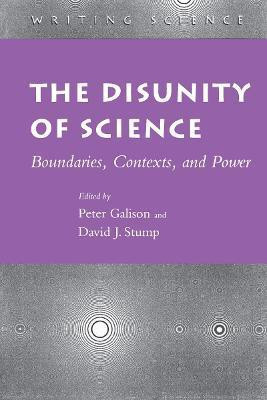
The Disunity of Science(English, Paperback, unknown)
- unknown
Paperback & Hardcover deals ―
Amazon IndiaGOFlipkart ₹ 4134SnapdealGOSapnaOnlineGOJain Book AgencyGOBooks Wagon₹1,284Book ChorGOCrosswordGODC BooksGOe-book & Audiobook deals ―
Amazon India GOGoogle Play Books GOAudible GO* Price may vary from time to time.
* GO = We're not able to fetch the price (please check manually visiting the website).
Know about the book -
The Disunity of Science(English, Paperback, unknown) is written by unknown and published by Stanford University Press. It's available with International Standard Book Number or ISBN identification 0804725624 (ISBN 10) and 9780804725620 (ISBN 13).
Is science unified or disunified? Over the last century, the question has raised the interest (and hackles) of scientists, philosophers, historians, and sociologists of science, for at stake is how science and society fit together. Recent years have seen a turn largely against the rhetoric of unity, ranging from the please of condensed matter physicists for disciplinary autonomy all the way to discussions in the humanities and social sciences that involve local history, feminism, multiculturalism, postmodernism, scientific relativism and realism, and social constructivism. Many of these varied aspects of the debate over the disunity of science are reflected in this volume, which brings together a number of scholars studying science who otherwise have had little to say to each other: feminist theorists, philosophers of science, sociologists of science. How does the context of discover shape knowledge? What are the philosophical consequences of a disunified science? Does, for example, an antirealism, a realism, or an arealism become defensible within a picture of local scientific knowledge? What politics lies behind and follows from a picture of the world of science more like a quilt than a pyramid? Who gains and loses if representation of science has standards that vary from place to place, field to field, and practitioner to practitioner.
