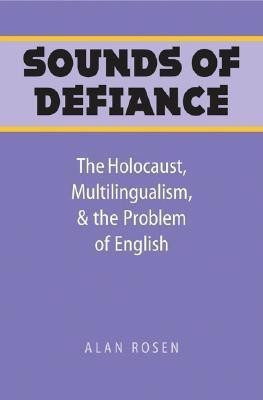
Sounds of Defiance(English, Hardcover, Rosen Alan)
- Rosen Alan
Paperback & Hardcover deals ―
Amazon IndiaGOFlipkart ₹ 2790SnapdealGOSapnaOnlineGOJain Book AgencyGOBooks Wagon₹7,541Book ChorGOCrosswordGODC BooksGOe-book & Audiobook deals ―
Amazon India GOGoogle Play Books GOAudible GO* Price may vary from time to time.
* GO = We're not able to fetch the price (please check manually visiting the website).
Know about the book -
Sounds of Defiance(English, Hardcover, Rosen Alan) is written by Rosen Alan and published by University of Nebraska Press. It's available with International Standard Book Number or ISBN identification 0803239629 (ISBN 10) and 9780803239623 (ISBN 13).
Language has frequently been at the center of discussions about Holocaust writing. Yet English, a primary language of neither the persecutors nor the victims, has generally been viewed as marginal to the events of the Holocaust. Alan Rosen argues that this marginal status profoundly affects writing on the Holocaust in English and fundamentally shapes our understanding of the events. Sounds of Defiance chronicles the evolving status of English in writing about the Holocaust, from the period of the Second World War to the 1990s. Each chapter highlights a representative work from a different genre-psychology, sociology, memoir, tales, fiction, and film-and examines the special position of English with regard to the Holocaust, supported by references to the role of other languages, including Hebrew, Yiddish, and German. This original approach provides a new perspective on such standard works as Eichmann in Jerusalem, The Shawl, and Maus, while drawing attention to others largely unknown.Rosen also links this analysis of English writing to developments in the postwar period: the escalating production of writing on the Holocaust in English; the increasing prestige of English as a global language; and paradoxically, within the contexts of neocolonial and multilingual studies, the increasingly uncertain position of English.
