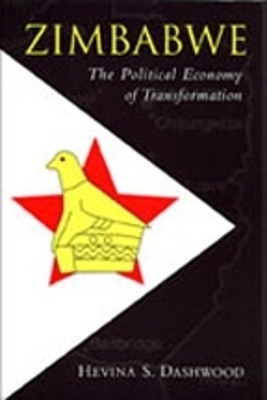
Zimbabwe(English, Paperback, Dashwood Hevina S.)
- Dashwood Hevina S.
Paperback & Hardcover deals ―
Amazon IndiaGOFlipkart ₹ 2638SnapdealGOSapnaOnlineGOJain Book AgencyGOBooks Wagon₹971Book ChorGOCrosswordGODC BooksGOe-book & Audiobook deals ―
Amazon India GOGoogle Play Books GOAudible GO* Price may vary from time to time.
* GO = We're not able to fetch the price (please check manually visiting the website).
Know about the book -
Zimbabwe(English, Paperback, Dashwood Hevina S.) is written by Dashwood Hevina S. and published by University of Toronto Press. It's available with International Standard Book Number or ISBN identification 0802082262 (ISBN 10) and 9780802082268 (ISBN 13).
Since Zimbabwe's transition to black-majority rule in 1980, the political changes in that country have been the subject of much study and debate. In this cogent analysis, Hevina Dashwood traces the evolution of Zimbabwe's development strategy from independence to 1997. During this period, there was a fundamental shift away from the social-welfarist orientation of the original development strategy, a change that coincided with the introduction of the Structural Adjustment Programme in 1991. Dashwood traces the reconfiguration of the class structure in Zimbabwe, which led to the formation of a state-based bourgeoisie, whose interests are more closely aligned with those of the agrarian and entrepreneurial elites, rather than with the poor. Greater reliance was placed on market considerations and it became clear that the government was moving away from its earlier strong commitment to meeting the welfare needs of the poor. Dashwood argues that it was the class interests of the ruling elite, rather than pressure from the international financial institutions, that explains the failure of the government to devise a coherent, socially sensitive development strategy in conjunction with market-based reforms. This account of Zimbabwe's transformation sheds light on recent events in Zimbabwe as well as current debates on economic development throughout Africa.
