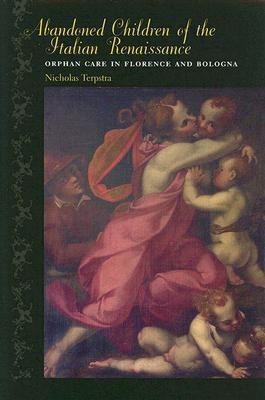
Abandoned Children of the Italian Renaissance(English, Hardcover, Terpstra Nicholas)
- Terpstra Nicholas
Paperback & Hardcover deals ―
Amazon IndiaGOFlipkart ₹ 3205SnapdealGOSapnaOnlineGOJain Book AgencyGOBooks Wagon₹349Book ChorGOCrosswordGODC BooksGOe-book & Audiobook deals ―
Amazon India GOGoogle Play Books GOAudible GO* Price may vary from time to time.
* GO = We're not able to fetch the price (please check manually visiting the website).
Know about the book -
Abandoned Children of the Italian Renaissance(English, Hardcover, Terpstra Nicholas) is written by Terpstra Nicholas and published by Johns Hopkins University Press. It's available with International Standard Book Number or ISBN identification 0801881846 (ISBN 10) and 9780801881848 (ISBN 13).
Nearly half of the children who lived in the cities of the late Italian Renaissance were under fifteen years of age. Grinding poverty, unstable families, and the death of a parent could make caring for these young children a burden. Many were abandoned, others orphaned. At a time when political rulers fashioned themselves as the "fathers" of society, these cast-off children presented a very immediate challenge and opportunity. In Bologna and Florence, government and private institutions pioneered orphanages to care for the growing number of homeless children. Nicholas Terpstra discusses the founding and management of these institutions, the procedures for placing children into them, the children's daily routine and education, and finally their departure from these homes. He explores the role of the city-state and considers why Bologna and Florence took different paths in operating the orphanages. Terpstra finds that Bologna's orphanages were better run, looked after the children more effectively, and were more successful in returning their wards to society as productive members of the city's economy.Florence's orphanages were larger and harsher, and made little attempt to reintegrate children into society. Based on extensive archival research and individual stories, Abandoned Children of the Italian Renaissance demonstrates how gender and class shaped individual orphanages in each city's network, and how politics, charity, and economics intertwined in the development of the early modern state.
