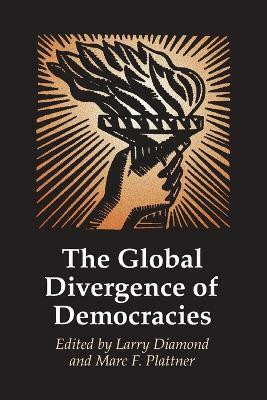
The Global Divergence of Democracies(English, Paperback, unknown)
- unknown
Paperback & Hardcover deals ―
Amazon IndiaGOFlipkart ₹ 2517SnapdealGOSapnaOnlineGOJain Book AgencyGOBooks Wagon₹447Book ChorGOCrosswordGODC BooksGOe-book & Audiobook deals ―
Amazon India GOGoogle Play Books GOAudible GO* Price may vary from time to time.
* GO = We're not able to fetch the price (please check manually visiting the website).
Know about the book -
The Global Divergence of Democracies(English, Paperback, unknown) is written by unknown and published by Johns Hopkins University Press. It's available with International Standard Book Number or ISBN identification 0801868424 (ISBN 10) and 9780801868429 (ISBN 13).
Drawn from outstanding articles published in the Journal of Democracy, The Global Divergence of Democracies follows the enthusiastically received earlier volume, The Global Resurgence of Democracy. The tremendous momentum of democratic expansion that characterized the 1980s and the first half of the 1990s has drawn to a halt. Significantly, this halt has not yet been followed by a "reverse wave"of democratic breakdowns, and democracy remains unchallenged as a global model and ideal of governance. The values of freedom, human rights, and popular sovereignty have continued to gain strength in the world. The first section of The Global Divergence of Democracies presents a few outstanding examples of the accumulating body of argument and evidence in favor of the universality of democratic principles and their basic compatibility with diverse religious and cultural traditions. Nonetheless, in practice, the performance of the world's newer democracies has become increasingly varied, a trend reflected in the title of this volume: The Global Divergence of Democracies.The divergence in the quality or depth of democracy is matched by a parallel divergence in progress toward the consolidation of democracy. The second section of this volume is devoted to the hotly contested debate among leading scholars of comparative democracy of the utility and meaning of the concept of consolidation. A third section examines some of the key building blocks of successful democracy, including political party systems, elections, federalism, the rule of law, a market economy, an independent judiciary, and civilian control of the military. The volume concludes with a series of appraisals of the divergent paths that democracy is taking both among and within various regions of the world, as well as in such key countries as Russia and China. With contributions by more than thirty of the world's leading scholars of democracy, this volume presents the most comprehensive assessment available of the state of democracy in the world at the beginning of the new millennium.
