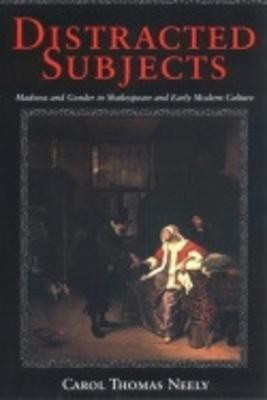
Distracted Subjects(English, Paperback, Neely Carol Thomas)
- Neely Carol Thomas
Paperback & Hardcover deals ―
Amazon IndiaGOFlipkart ₹ 3884SnapdealGOSapnaOnlineGOJain Book AgencyGOBooks Wagon₹271Book ChorGOCrosswordGODC BooksGOe-book & Audiobook deals ―
Amazon India GOGoogle Play Books GOAudible GO* Price may vary from time to time.
* GO = We're not able to fetch the price (please check manually visiting the website).
Know about the book -
Distracted Subjects(English, Paperback, Neely Carol Thomas) is written by Neely Carol Thomas and published by Cornell University Press. It's available with International Standard Book Number or ISBN identification 0801489245 (ISBN 10) and 9780801489242 (ISBN 13).
In the first book to provide a feminist analysis of early modern madness, Carol Thomas Neely reveals the mobility and heterogeneity of discourses of "distraction," the most common term for the condition in late-sixteenth- and early seventeenth-century England. Distracted Subjects shows how changing ideas of madness that circulated through medical, dramatic, and political texts transformed and gendered subjectivities. Supernatural causation is denied, new diagnoses appear, and stage representations proliferate. Drama sometimes leads and sometimes follows other cultural discourses-or forges its own prophetic figures of distraction. The Spanish Tragedy first links madness to masculine tragic self-representation, and Hamlet invents a language to dramatize feminine somatic illness. Innovative women's melancholy is theorized in medical and witchcraft treatises and then elaborated in the extended portrait of the Jailer's Daughter's distraction in The Two Noble Kinsmen. Lovesickness, newly diagnosed in women, demands novel cures, and allows expressions of transgressive sexual desire in treatises and in plays such as As You Like It. The rituals of possession and exorcism, intensely debated off stage, are mocked and exploited on stage in reiterated comic scenes of confinement that madden men to enhance women's power. Neely's final chapter provides a startling challenge to the critically alluring analogy between Bedlam and the early modern stage by documenting that Bethlem hospital offered care, not spectacle, whereas stage Bedlamites served metatheatrical and prophylactic, not mimetic, ends. An epilogue places this particular historical moment within the longer history of madness and shows how our own attitudes toward distraction are haunted by those earlier debates and representations.
