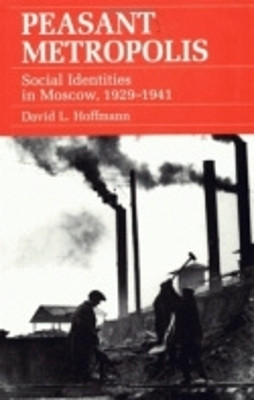
Peasant Metropolis(English, Paperback, Hoffmann David L.)
- Hoffmann David L.
Paperback & Hardcover deals ―
Amazon IndiaGOFlipkart ₹ 2348SnapdealGOSapnaOnlineGOJain Book AgencyGOBooks Wagon₹1,483Book ChorGOCrosswordGODC BooksGOe-book & Audiobook deals ―
Amazon India GOGoogle Play Books GOAudible GO* Price may vary from time to time.
* GO = We're not able to fetch the price (please check manually visiting the website).
Know about the book -
Peasant Metropolis(English, Paperback, Hoffmann David L.) is written by Hoffmann David L. and published by Cornell University Press. It's available with International Standard Book Number or ISBN identification 0801486602 (ISBN 10) and 9780801486609 (ISBN 13).
During the 1930's, 23 million peasants left their villages and moved to Soviet cities, where they comprised almost half the urban population and more than half the nation's industrial workers. Drawing on previously inaccessible archival materials, David L. Hoffmann shows how this massive migration to the cities-an influx unprecedented in world history-had major consequences for the nature of the Soviet system and the character of Russian society even today. Hoffmann focuses on events in Moscow between the launching of the industrialization drive in 1929 and the outbreak of war in 1941. He reconstructs the attempts of Party leaders to reshape the social identity and behavior of the millions of newly urbanized workers, who appeared to offer a broad base of support for the socialist regime. The former peasants, however, had brought with them their own forms of cultural expression, social organization, work habits, and attitudes toward authority. Hoffmann demonstrates that Moscow's new inhabitants established social identities and understandings of the world very different from those prescribed by Soviet authorities. Their refusal to conform to the authorities' model of a loyal proletariat thwarted Party efforts to construct a social and political order consistent with Bolshevik ideology. The conservative and coercive policies that Party leaders adopted in response, he argues, contributed to the Soviet Union's emergence as an authoritarian welfare state.
