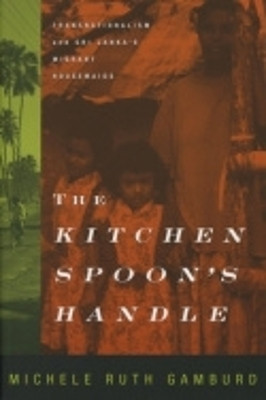
The Kitchen Spoon's Handle(English, Paperback, Gamburd Michele Ruth)
- Gamburd Michele Ruth
Paperback & Hardcover deals ―
Amazon IndiaGOFlipkart ₹ 3449SnapdealGOSapnaOnlineGOJain Book AgencyGOBooks Wagon₹875Book ChorGOCrosswordGODC BooksGOe-book & Audiobook deals ―
Amazon India GOGoogle Play Books GOAudible GO* Price may vary from time to time.
* GO = We're not able to fetch the price (please check manually visiting the website).
Know about the book -
The Kitchen Spoon's Handle(English, Paperback, Gamburd Michele Ruth) is written by Gamburd Michele Ruth and published by Cornell University Press. It's available with International Standard Book Number or ISBN identification 0801486440 (ISBN 10) and 9780801486449 (ISBN 13).
A common Sinhala proverb states, "A woman's understanding reaches only the length of the kitchen spoon's handle." In this beautifully written book on the effects of female migration from Sri Lanka, Michele Ruth Gamburd shows that the length of that handle now spans several thousand miles, rather than a mere twelve inches. During the past twenty years, a great many Sri Lankan women have left their homes and families to work as housemaids in the wealthy oil-producing states of the Middle East. Gamburd explores global and local, as well as personal, reasons why so many women leave to work so far away. Focusing primarily on the home community, rather than on the experiences of the workers abroad, she vividly illustrates the impact of the migration on those left behind and on the migrants who return. As migrant women take on the formerly masculine role of breadwinner, Gamburd explains, traditional concepts of the value of "women's work" are significantly altered. She examines the effects of female migration on caste hierarchies, class relations, gender roles, and family interactions. The Kitchen Spoon's Handle skillfully blends the stories and memories of returned migrants and their families and neighbors with interviews with government officials, recruiting agents, and moneylenders. The book provides a rich and sensitive portrait of the confluence of global and local processes in the lives of the villagers. Gamburd presents a sophisticated, yet very readable, discussion of current theories of power, agency, and identity.
