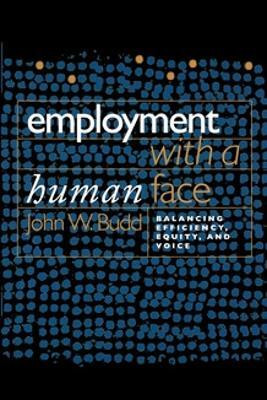
Employment with a Human Face(English, Hardcover, Budd John W.)
- Budd John W.
Paperback & Hardcover deals ―
Amazon IndiaGOFlipkart ₹ 6289SnapdealGOSapnaOnlineGOJain Book AgencyGOBooks Wagon₹294Book ChorGOCrosswordGODC BooksGOe-book & Audiobook deals ―
Amazon India GOGoogle Play Books GOAudible GO* Price may vary from time to time.
* GO = We're not able to fetch the price (please check manually visiting the website).
Know about the book -
Employment with a Human Face(English, Hardcover, Budd John W.) is written by Budd John W. and published by Cornell University Press. It's available with International Standard Book Number or ISBN identification 0801442087 (ISBN 10) and 9780801442087 (ISBN 13).
John W. Budd contends that the turbulence of the current workplace and the importance of work for individuals and society make it vitally important that employment be given "a human face." Contradicting the traditional view of the employment relationship as a purely economic transaction, with business wanting efficiency and workers wanting income, Budd argues that equity and voice are equally important objectives. The traditional narrow focus on efficiency must be balanced with employees' entitlement to fair treatment (equity) and the opportunity to have meaningful input into decisions (voice), he says. Only through a greater respect for these human concerns can broadly shared prosperity, respect for human dignity, and equal appreciation for the competing human rights of property and labor be achieved.Budd proposes a fresh set of objectives for modern democracies-efficiency, equity, and voice-and supports this new triad with an intellectual framework for analyzing employment institutions and practices. In the process, he draws on scholarship from industrial relations, law, political science, moral philosophy, theology, psychology, sociology, and economics, and advances debates over free markets, globalization, human rights, and ethics. He applies his framework to important employment-related topics, such as workplace governance, the New Deal industrial relations system, comparative industrial relations, labor union strategies, and globalization. These analyses create a foundation for reforming employment practices, social norms, and public policies. In the book's final chapter, Budd advocates the creation of the field of human resources and industrial relations and explores the wider implications of this renewed conceptualization of industrial relations.
