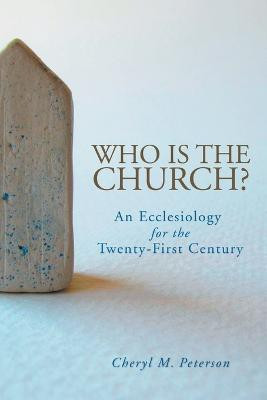
Who Is the Church? An Ecclesiology for the Twenty-First Century(English, Paperback, Peterson Cheryl M.)
- Peterson Cheryl M.
Paperback & Hardcover deals ―
Amazon IndiaGOFlipkart ₹ 672SnapdealGOSapnaOnlineGOJain Book AgencyGOBooks Wagon₹1,884Book ChorGOCrosswordGODC BooksGOe-book & Audiobook deals ―
Amazon India GOGoogle Play Books GOAudible GO* Price may vary from time to time.
* GO = We're not able to fetch the price (please check manually visiting the website).
Know about the book -
Who Is the Church? An Ecclesiology for the Twenty-First Century(English, Paperback, Peterson Cheryl M.) is written by Peterson Cheryl M. and published by Augsburg Fortress Publishers. It's available with International Standard Book Number or ISBN identification 0800698819 (ISBN 10) and 9780800698812 (ISBN 13).
Many congregations today are beset by fears, whether over loss of members and money, or of irrelevancy in an increasingly pluralistic society. To counter this, many congregations focus on strategy and purposewhat churches "do"but Cheryl Peterson submits that mainline churches need to focus instead on "what" or "who" they areto reclaim a theological, rather than sociological, understanding of themselves. To do this, she places the questions of the church's identity and mission into a conversation with the primary ecclesiological paradigms of the past century: the neo-Reformation concept of the church as a "word event" and the ecumenical paradigms of the church as "communion." She argues that these two paradigms assume a context of cultural Christendom that no longer existsfocused on the church that is gatheredrather than the missional church that is sent out. Peterson suggests instead that we understand the church as a people created by the Spirit to be a community, and that we must claim a narrative method to explore the church's identityspecifically, the story of the church's origin in the Acts of the Apostles. Finally, here is a way of thinking of church that reconciles the best of competing models of church for the future of mainline Protestant theology.
