Rhetorical Hermeneutics(English, Paperback, unknown)
- unknown
Paperback & Hardcover deals ―
Amazon IndiaGOFlipkart ₹ 1974SnapdealGOSapnaOnlineGOJain Book AgencyGOBooks Wagon₹6,770Book ChorGOCrosswordGODC BooksGOe-book & Audiobook deals ―
Amazon India GOGoogle Play Books GOAudible GO* Price may vary from time to time.
* GO = We're not able to fetch the price (please check manually visiting the website).
Know about the book -
Rhetorical Hermeneutics(English, Paperback, unknown) is written by unknown and published by State University of New York Press. It's available with International Standard Book Number or ISBN identification 079143110X (ISBN 10) and 9780791431108 (ISBN 13).
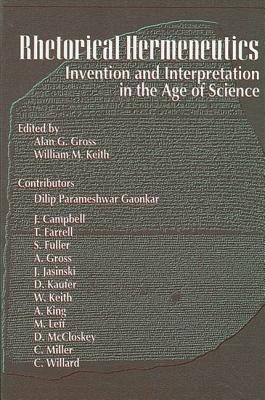
Examines the nature of rhetorical theory and criticism, the rhetoric of science, and the impact of poststructuralism and postmodernism on contemporary accounts of rhetoric. Rhetorical Hermeneutics asks whether rhetorical theory can function as a general hermeneutic, a master key to texts. The dazzling central essay by Dilip Parameshwar Gaonkar questions rhetoric's globally interpretive status; Gaonkar begins with the ubiquity of rhetoric: "It is a habit of our time to invoke rhetoric, time and again, to make sense of a wide variety of discursive practices that beset and perplex us, and of discursive artifacts that annoy and entertain us, and of discursive formations that inscribe and subjugate us. Rhetoric is a way of reading the endless discursive debris that surrounds us." Starting from the work of John Angus Campbell, Alan Gross, and Lawrence Prelli on the rhetoric of science, Gaonkar broadens his critique to fundamental issues for any rhetorical theory and develops four questions that cut to the heart of the possibility of a (post)modern rhetoric: How can rhetoric, an art traditionally directed toward practice, transform itself into hermeneutic theory, a mode of reading? Does contemporary rhetorical theory have legitimate theoretical status? Can an intentional, strategic theory of rhetoric survive the poststructuralist, postmodernist critique? Is the case study, the centerpiece of rhetorical and ethnographic scholarship, epistemologically robust enough to bear the weight of a discipline? Representing a variety of disciplines, contributors to this volume include: M. Leff, D. McCloskey, J. A. Campbell, A. Gross, S. Fuller, C. Miller, C. Willard, J. Jasinski, W. Keith, D. Kaufer, A. King, and T. Farrell. In a pellucid final essay, "A Close Reading of the Third Kind," Gaonkar responds to his critics.
