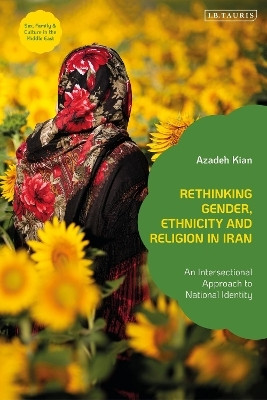
Rethinking Gender, Ethnicity and Religion in Iran(English, Paperback, Kian Azadeh)
- Kian Azadeh
Paperback & Hardcover deals ―
Amazon IndiaGOFlipkart ₹ 2594SnapdealGOSapnaOnlineGOJain Book AgencyGOBooks Wagon₹2,342Book ChorGOCrosswordGODC BooksGOe-book & Audiobook deals ―
Amazon India GOGoogle Play Books GOAudible GO* Price may vary from time to time.
* GO = We're not able to fetch the price (please check manually visiting the website).
Know about the book -
Rethinking Gender, Ethnicity and Religion in Iran(English, Paperback, Kian Azadeh) is written by Kian Azadeh and published by Bloomsbury Publishing PLC. It's available with International Standard Book Number or ISBN identification 0755650298 (ISBN 10) and 9780755650293 (ISBN 13).
Winner of the Latifeh Yarshater book prize 2024 Covering the Pahlavi modern nation-state as well as the Islamic regime, this book examines the crucial shifts that affected Sunnite and subaltern women once Shi'ism became the state religion after the Iranian Revolution. Focusing on women in the Baluchistan and Golestan provinces of Iran, Azadeh Kian analyses and explores issues of cultural racialization, ethno-centrism, Shi'a centrism, and patriarchal and chauvinistic ideologies in Iranian society propagated by the state and sustained by its policies. Based on quantitative and qualitative surveys taken throughout Iran, comprised of over 7,000 married women and 100 interviews with a sample of Sunnite and subaltern Persian women, Kian reveals how social hierarchy and power relations based on gender, class, ethnicity and religion operate. She argues that women have been at the heart of the process of national and ethnic re-construction as women, as potential mothers, are expected to reproduce national and ethnic boundaries. Kian argues that by examining the family institution as a site of power, analysing family dynamics as well as women's everyday lives, the politics of ordinary Iranians and the relationship between state and society can be better understood. Kian argues that the time is ripe to achieve a non-hegemonic definition of Iranian national identity, through acknowledgement of gender, class, ethnic, and religious diversity and plurality of experiences of oppression and injustice.
