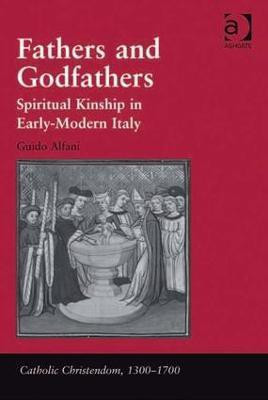
Fathers and Godfathers(English, Hardcover, Alfani Guido)
- Alfani Guido
Paperback & Hardcover deals ―
Amazon IndiaGOFlipkart ₹ 2949SnapdealGOSapnaOnlineGOJain Book AgencyGOBooks Wagon₹1,062Book ChorGOCrosswordGODC BooksGOe-book & Audiobook deals ―
Amazon India GOGoogle Play Books GOAudible GO* Price may vary from time to time.
* GO = We're not able to fetch the price (please check manually visiting the website).
Know about the book -
Fathers and Godfathers(English, Hardcover, Alfani Guido) is written by Alfani Guido and published by Taylor & Francis Ltd. It's available with International Standard Book Number or ISBN identification 0754667375 (ISBN 10) and 9780754667377 (ISBN 13).
In medieval Europe baptism did not merely represent a solemn and public recognition of the 'natural' birth of a child, but was regarded as a second, 'spiritual birth', within a social group often different from the child's blood relations: a spiritual family, composed of godfathers and godmothers. By analyzing the changing theological and social nature of spiritual kinship and godparenthood between 1450 and 1650, this book explores how these medieval concepts were developed and utilised by the Catholic Church in an era of reform and challenge. It demonstrates how such ties continued to be of major social importance throughout the sixteenth and seventeenth centuries, but were often used in ways not always coherent with their original religious meaning, and which could have unexpected social consequences. In particular, the book analyzes in detail the phase of transition from the traditional model of godparenthood which allowed for multiple godparents, to the new couple model (one godfather and one godmother) imposed by Tridentine law. Drawing upon a large database of archival data taken from parish books of baptisms and marriages, pastoral visitations, diocesan statutes, synods and provincial councils, it is shown how attempts were made to resist or to compromise with the Church, thus providing a better understanding of the often contested meaning given to godparenthood by early modern society. Whilst the Church was ultimately successful in imposing its will, the book concludes that this was to have unexpected results that were to eventually weaken the role of godparents. Rather than persuading parents to choose real 'spiritual tutors' to act as godparents, the choice of godparents became increasingly influenced with social status, so that godparenthood began to resemble a pure clientele system, something it had never been before. Through this long-term exploration of Catholic spiritual kinship, much is revealed, not only about godparenthood, but about the wider social and religious networks. Comparison with Protestant reactions to the same issues provides further insight into the importance of this subject to early modern European society.
