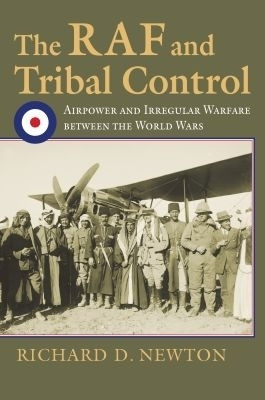
The RAF and Tribal Control(English, Hardcover, Newton Richard D.)
- Newton Richard D.
Paperback & Hardcover deals ―
Amazon IndiaGOFlipkart ₹ 5718SnapdealGOSapnaOnlineGOJain Book AgencyGOBooks Wagon₹274Book ChorGOCrosswordGODC BooksGOe-book & Audiobook deals ―
Amazon India GOGoogle Play Books GOAudible GO* Price may vary from time to time.
* GO = We're not able to fetch the price (please check manually visiting the website).
Know about the book -
The RAF and Tribal Control(English, Hardcover, Newton Richard D.) is written by Newton Richard D. and published by University Press of Kansas. It's available with International Standard Book Number or ISBN identification 0700628711 (ISBN 10) and 9780700628711 (ISBN 13).
In light of technological advances and multiplying irregular conflicts, conventional wisdom suggests airpower as the ideal, low-cost means of conducting modern warfare-and the air control method adopted by the British between the two world wars seems to back this up. Swift and precise targeting from above was considered more humane, after all, sparing civilians as well as British soldiers during punitive expeditions in unruly colonial regions. But what conventional wisdom misses, and this book makes clear, is how the Royal Air Force's (RAF) innovative approach actually worked-relying on British airmen on the ground at least as much as on airborne technology to control restive tribes and villages. The RAF and Tribal Control tells the story of these forgotten airmen, the RAF special service officers who, embedded among local populations and indigenous tribes, collected vital intelligence, developed targets, directed air strikes when necessary, and, perhaps most important, provided personal assessments of airpower's qualitative effects against primarily guerrilla forces. Airpower is a highly technological endeavor. But in wars where the human dimension takes primacy, Richard Newton reminds us that measuring the effectiveness of air actions requires a qualitative approach that is nearly impossible via overhead sensors. And this is where the RAF special service officers came in-airmen who understood the local cultures and peoples, they served as conduits for information and communication between the colonial administration and the tribes and villages. It was their ground-level contributions that made the integration of airpower into the civilian administration of colonies and mandates possible. This first in-depth account of the RAF special service officers' role brings to light previously unpublished insights. The RAF and Tribal Control fills a significant gap in the history of air warfare. In doing so, the book dispels the notion that airpower alone is effective in small wars and irregular conflicts-and reveals the importance of the "boots-on-the-ground" human component in waging unconventional air warfare, both in the days of the RAF's vaunted air control and in our own time.
