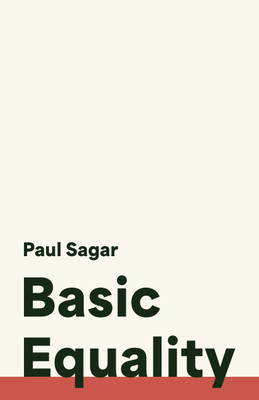
Basic Equality(English, Hardcover, Sagar Paul)
- Sagar Paul
Paperback & Hardcover deals ―
Amazon IndiaGOFlipkart ₹ 4537SnapdealGOSapnaOnlineGOJain Book AgencyGOBooks Wagon₹566Book ChorGOCrosswordGODC BooksGOe-book & Audiobook deals ―
Amazon India GOGoogle Play Books GOAudible GO* Price may vary from time to time.
* GO = We're not able to fetch the price (please check manually visiting the website).
Know about the book -
Basic Equality(English, Hardcover, Sagar Paul) is written by Sagar Paul and published by Princeton University Press. It's available with International Standard Book Number or ISBN identification 0691255342 (ISBN 10) and 9780691255347 (ISBN 13).
An innovative argument that vindicates our normative commitment to basic equality, synthesising philosophy, history, and psychology What makes human beings one another's equals? That we are "basic equals" has become a bedrock assumption in Western moral and political philosophy. And yet establishing why we ought to believe this claim has proved fiendishly difficult, floundering in the face of the many inequalities that characterise the human condition. In this provocative work, Paul Sagar offers a novel approach to explaining and justifying basic equality. Rather than attempting to find an independent foundation for basic equality, he argues, we should instead come to see our commitment to this idea as the result of the practice of treating others as equals. Moreover, he continues, it is not enough to grapple with the problem through philosophy alone-by just thinking very hard, in our armchairs; we must draw insights from history and psychology as well. Sagar writes that, as things stand, there appear to be no good arguments for believing in the truth of basic equality. Indeed, for much of Western intellectual history and social practice, basic inequality has been the default position. How is it then, Sagar asks, that in Western societies, in a period of less than a century, basic equality emerged as the dominant view? Sagar approaches this not as a mere philosophical puzzle, but as a dramatic historical development. In so doing, he shows us what is at stake when human beings treat one another as equals just because they are human beings.
