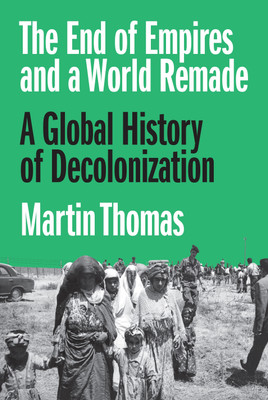
The End of Empires and a World Remade(English, Hardcover, Thomas Martin Professor)
- Thomas Martin Professor
Paperback & Hardcover deals ―
Amazon IndiaGOFlipkart ₹ 2994SnapdealGOSapnaOnlineGOJain Book AgencyGOBooks Wagon₹1,019Book ChorGOCrosswordGODC BooksGOe-book & Audiobook deals ―
Amazon India GOGoogle Play Books GOAudible GO* Price may vary from time to time.
* GO = We're not able to fetch the price (please check manually visiting the website).
Know about the book -
The End of Empires and a World Remade(English, Hardcover, Thomas Martin Professor) is written by Thomas Martin Professor and published by Princeton University Press. It's available with International Standard Book Number or ISBN identification 0691190925 (ISBN 10) and 9780691190921 (ISBN 13).
A capacious history of decolonization from the decline of empires to the era of globalization Empires, until recently, were everywhere. They shaped borders, stirred conflicts, and set the terms of international politics. With the collapse of empire came a fundamental reorganization of our world. Decolonization unfolded across territories as well as within them. Its struggles became internationalized and transnational, as much global campaigns of moral disarmament against colonial injustice as local contests of arms. In this expansive history, Martin Thomas tells the story of decolonization and its intrinsic link to globalization. He traces the connections between these two transformative processes: the end of formal empire and the acceleration of global integration, market reorganization, cultural exchange, and migration. The End of Empires and a World Remade shows how profoundly decolonization shaped the process of globalization in the wake of empire collapse. In the second half of the twentieth century, decolonization catalyzed new international coalitions; it triggered partitions and wars; and it reshaped North-South dynamics. Globalization promised the decolonized greater access to essential resources, to wider networks of influence, and to worldwide audiences, but its neoliberal variant has reinforced economic inequalities and imperial forms of political and cultural influences. In surveying these two codependent histories across the world, from Latin America to Asia, Thomas explains why the deck was so heavily stacked against newly independent nations. Decolonization stands alongside the great world wars as the most transformative event of twentieth-century history. In The End of Empires and a World Remade, Thomas offers a masterful analysis of the greatest process of state-making (and empire-unmaking) in modern history.
