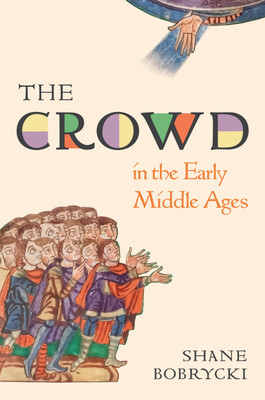
The Crowd in the Early Middle Ages(English, Hardcover, Bobrycki Shane Dr.)
- Bobrycki Shane Dr.
Paperback & Hardcover deals ―
Amazon IndiaGOFlipkart ₹ 5335SnapdealGOSapnaOnlineGOJain Book AgencyGOBooks Wagon₹1,110Book ChorGOCrosswordGODC BooksGOe-book & Audiobook deals ―
Amazon India GOGoogle Play Books GOAudible GO* Price may vary from time to time.
* GO = We're not able to fetch the price (please check manually visiting the website).
Know about the book -
The Crowd in the Early Middle Ages(English, Hardcover, Bobrycki Shane Dr.) is written by Bobrycki Shane Dr. and published by Princeton University Press. It's available with International Standard Book Number or ISBN identification 0691189692 (ISBN 10) and 9780691189697 (ISBN 13).
The importance of collective behavior in early medieval Europe By the fifth and sixth centuries, the bread and circuses and triumphal processions of the Roman Empire had given way to a quieter world. And yet, as Shane Bobrycki argues, the influence and importance of the crowd did not disappear in early medieval Europe. In The Crowd in the Early Middle Ages, Bobrycki shows that although demographic change may have dispersed the urban multitudes of Greco-Roman civilization, collective behavior retained its social importance even when crowds were scarce. Most historians have seen early medieval Europe as a world without crowds. In fact, Bobrycki argues, early medieval European sources are full of crowds-although perhaps not the sort historians have trained themselves to look for. Harvests, markets, festivals, religious rites, and political assemblies were among the gatherings used to regulate resources and demonstrate legitimacy. Indeed, the refusal to assemble and other forms of "slantwise" assembly became a weapon of the powerless. Bobrycki investigates what happened when demographic realities shifted, but culture, religion, and politics remained bound by the past. The history of crowds during the five hundred years between the age of circuses and the age of crusades, Bobrycki shows, tells an important story-one of systemic and scalar change in economic and social life and of reorganization in the world of ideas and norms.
